
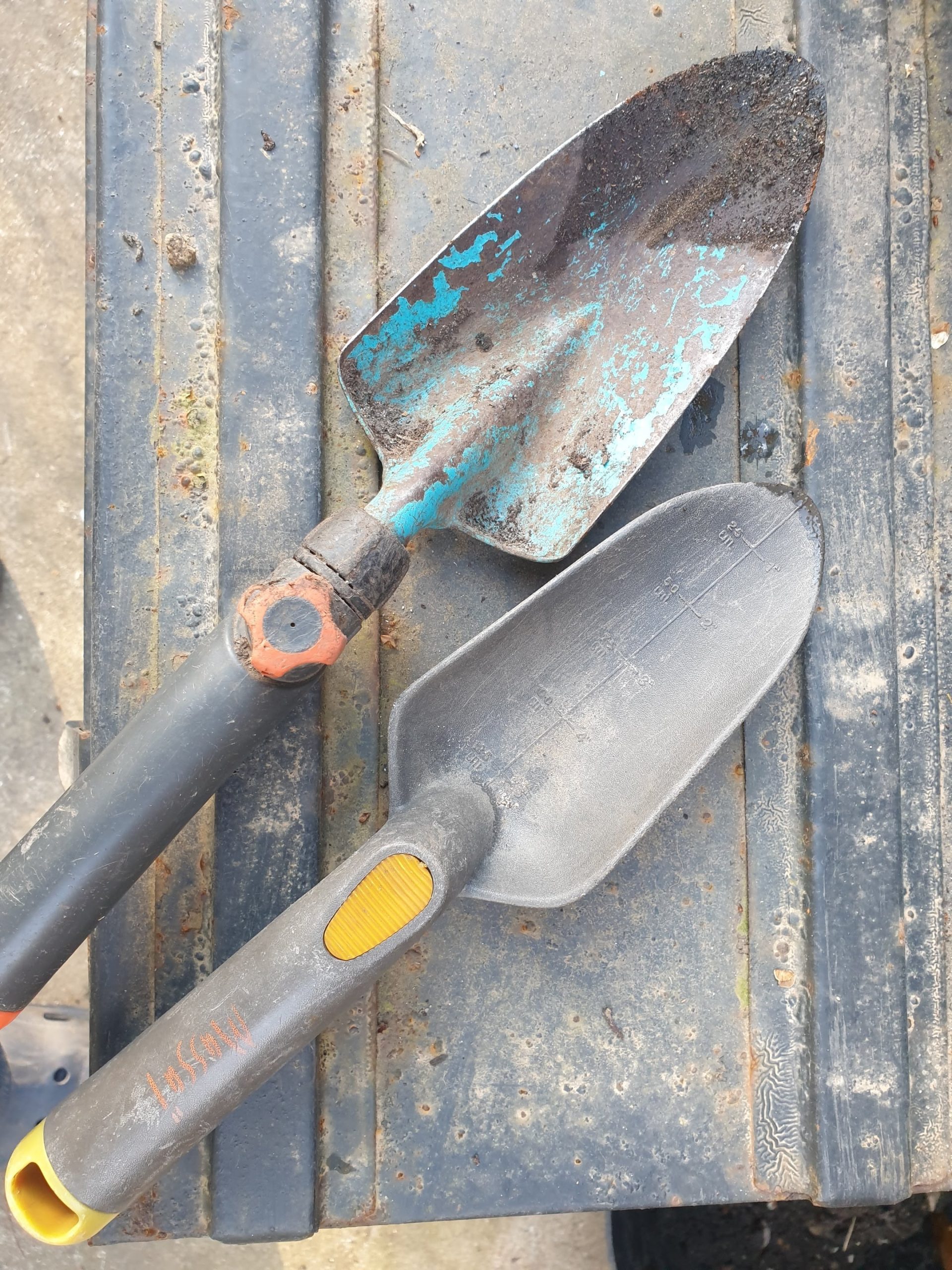

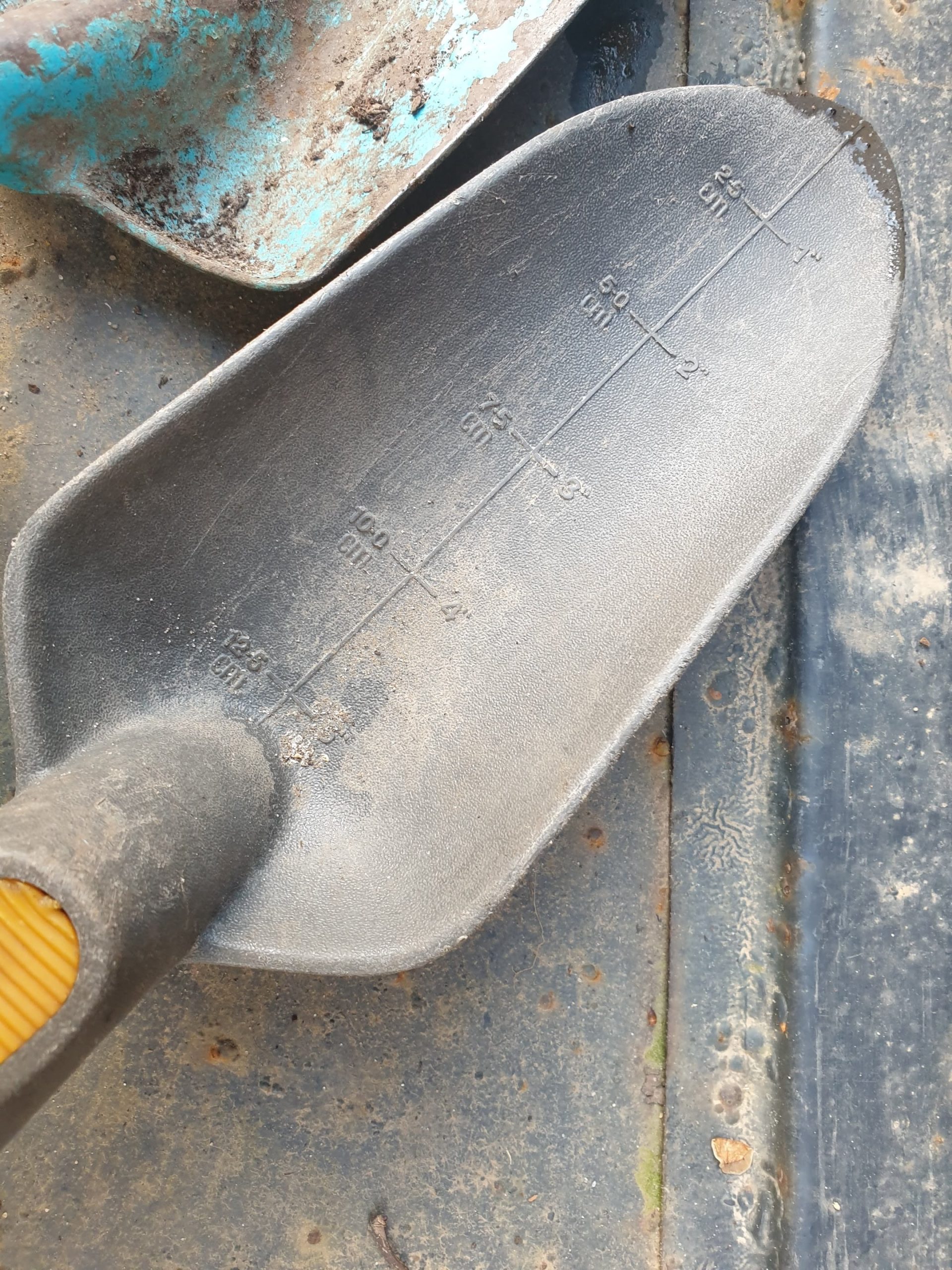

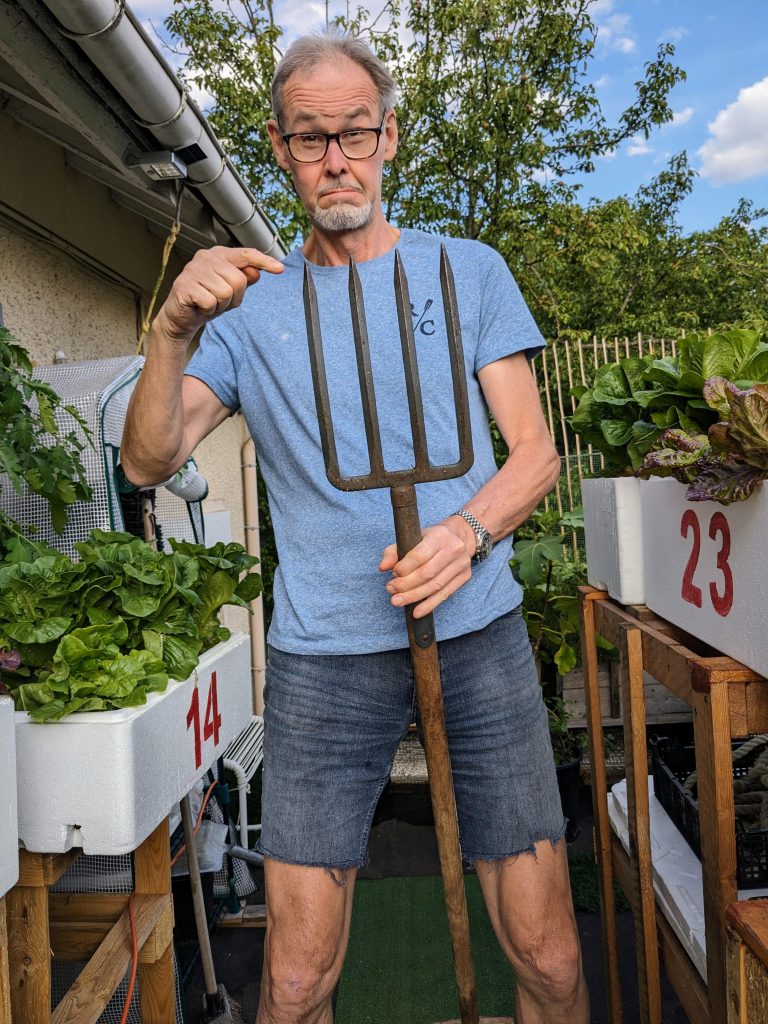
- A trowel is essential for making holes and moving soil. There are 2 materials: metal or plastic. I prefer metal which will cut into hard soil easier than plastic. The grey plastic trowel has a handy measuring scale, something to look out for.
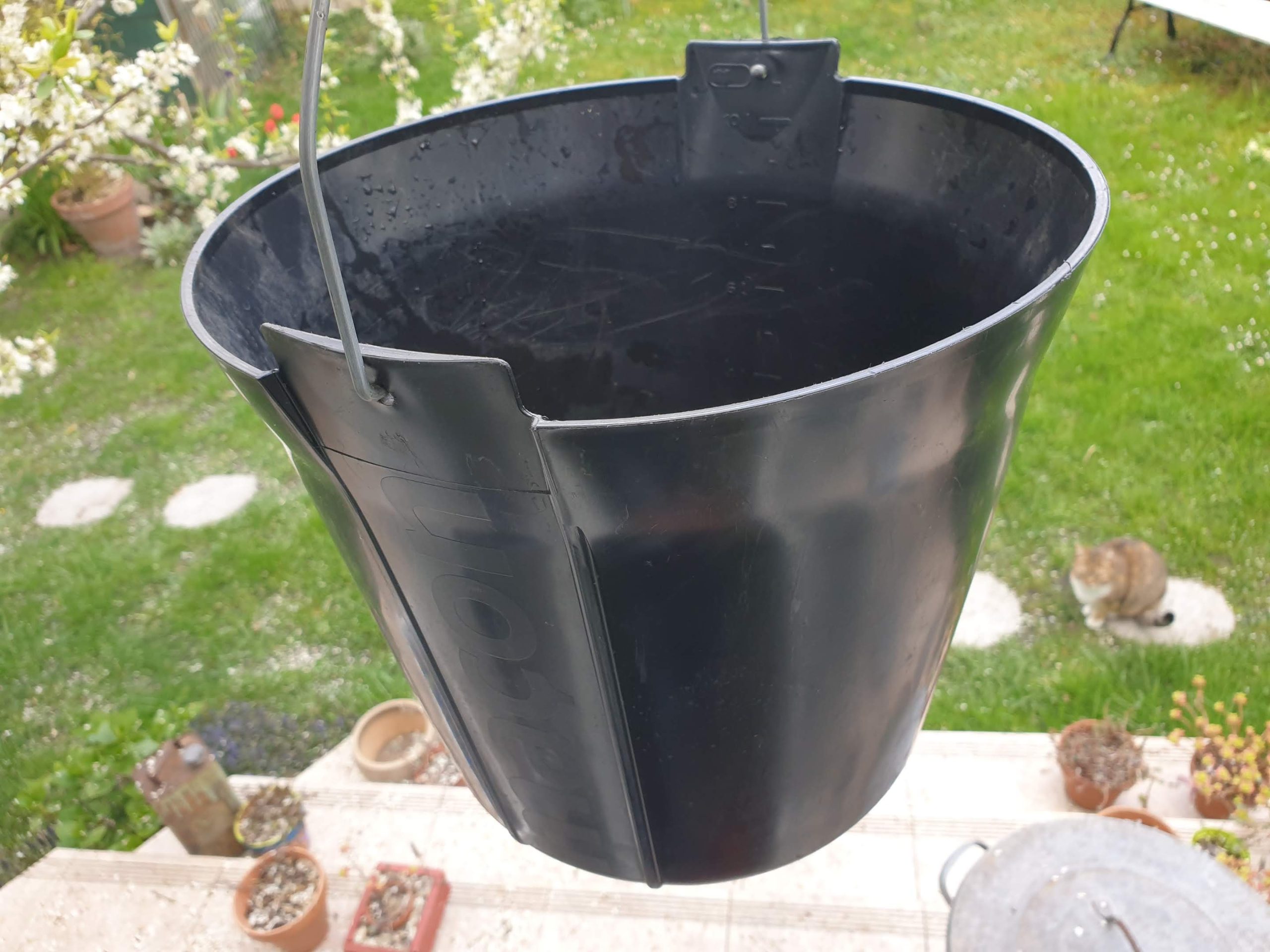
- Buckets for moving soil around or making a potting soil mix. They can be in plastic or metal. I use a plastic stone mason’s bucket which is particularly resistant and durable and has a measuring scale up to 11 litres on the inside. I also use these black plastic buckets as pots. With some holes drilled in the bottom, the metal handles make carrying my plants around easy peasy.
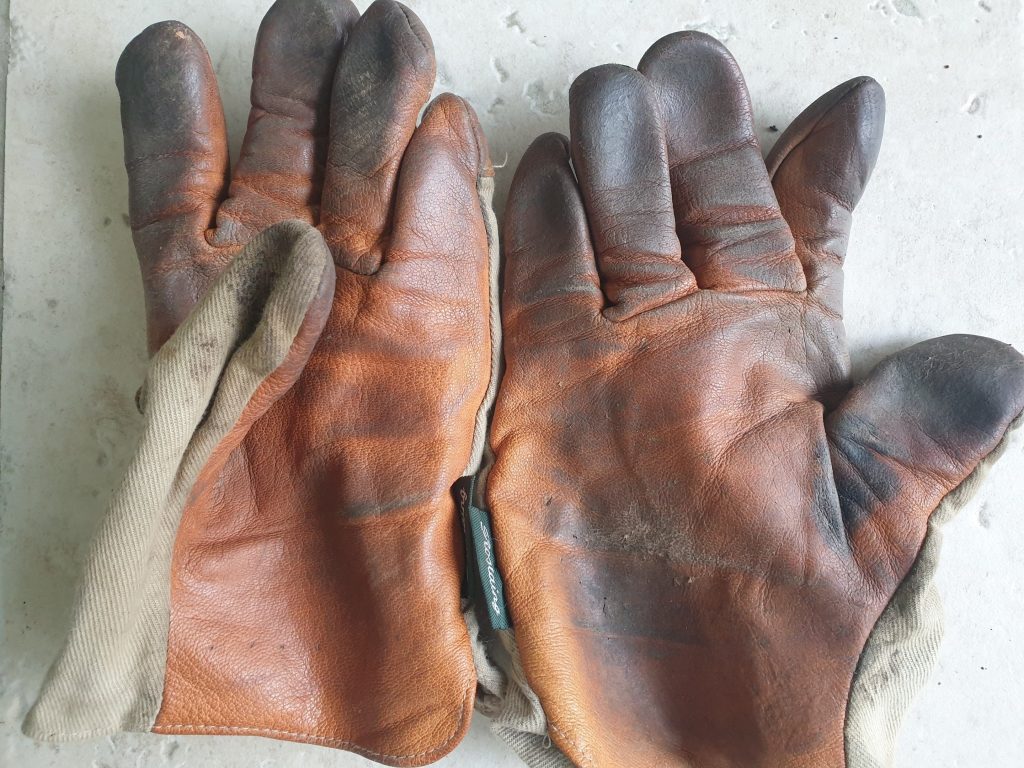
- Gardening gloves for heavy duty work like moving or lifting your wooden pallets and they’ll protect your hands from rough edges and splinters.
- Pencil or a similar pointed object is a handy tool when you’re removing plants from small pots. Just push the pencil through the hole at the bottom of the pot to remove the plant.
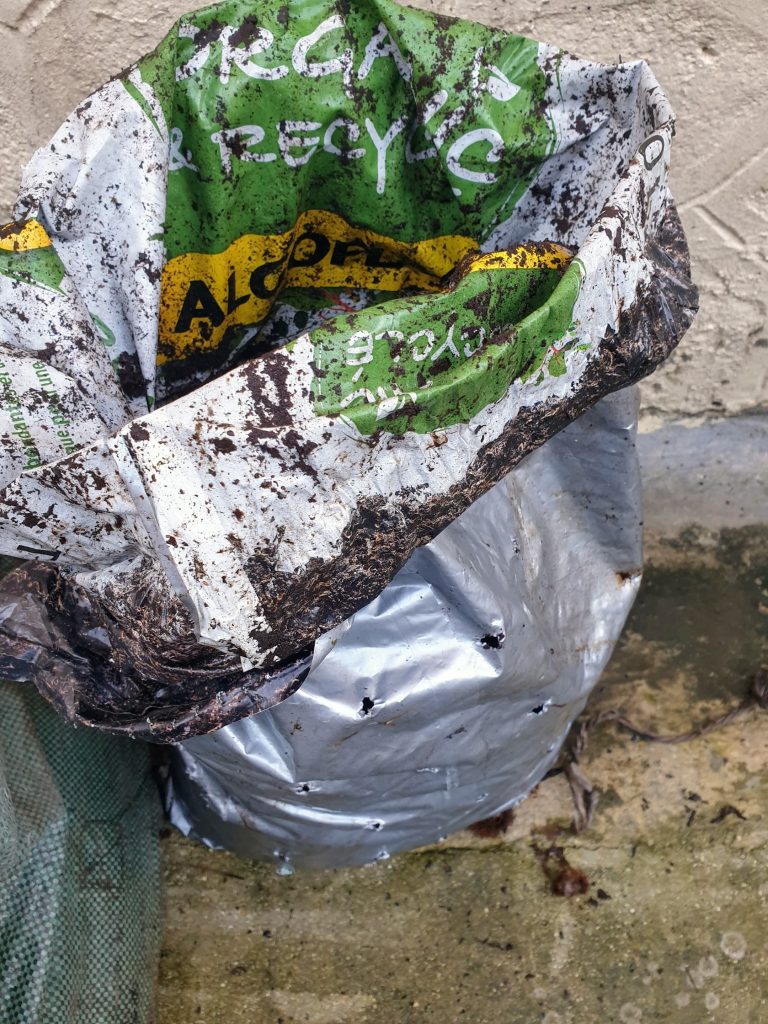
- Strong plastic bags used for commercial compost and turned inside out, make great all-purpose bags for storing plant waste, soil, or dried leaves for mulch.
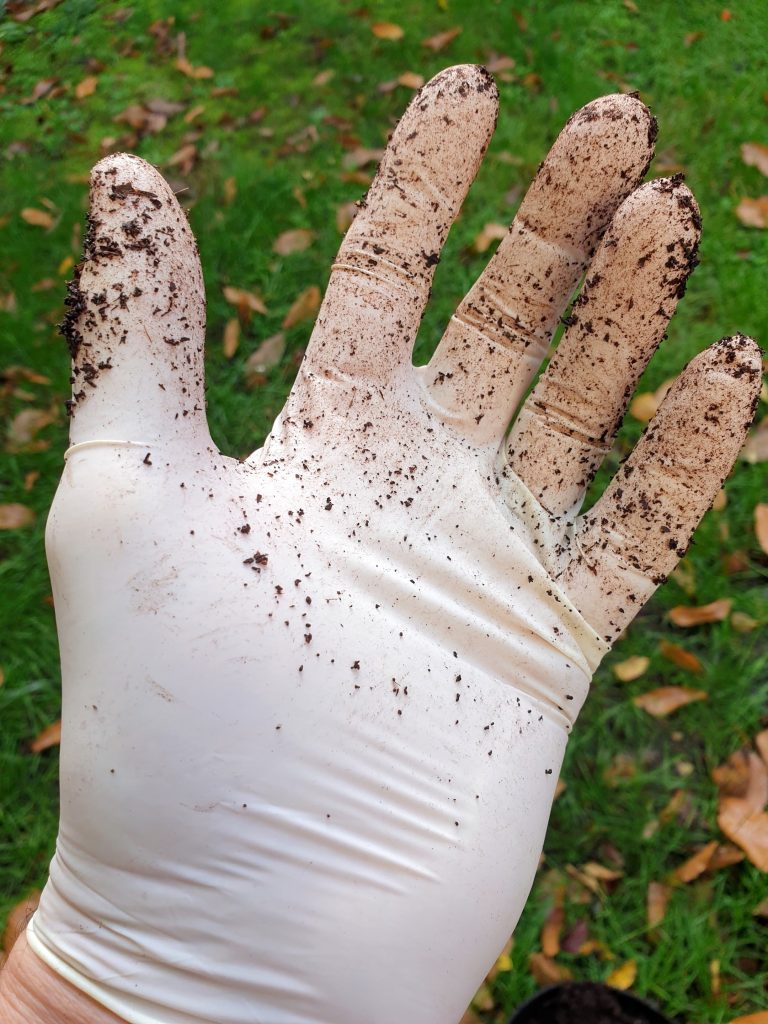
- Thin silicone gloves keep your hands and fingernails clean in wet soil and protect your skin from cuts and abrasions. I go bare handed when the soil is warm and dry.
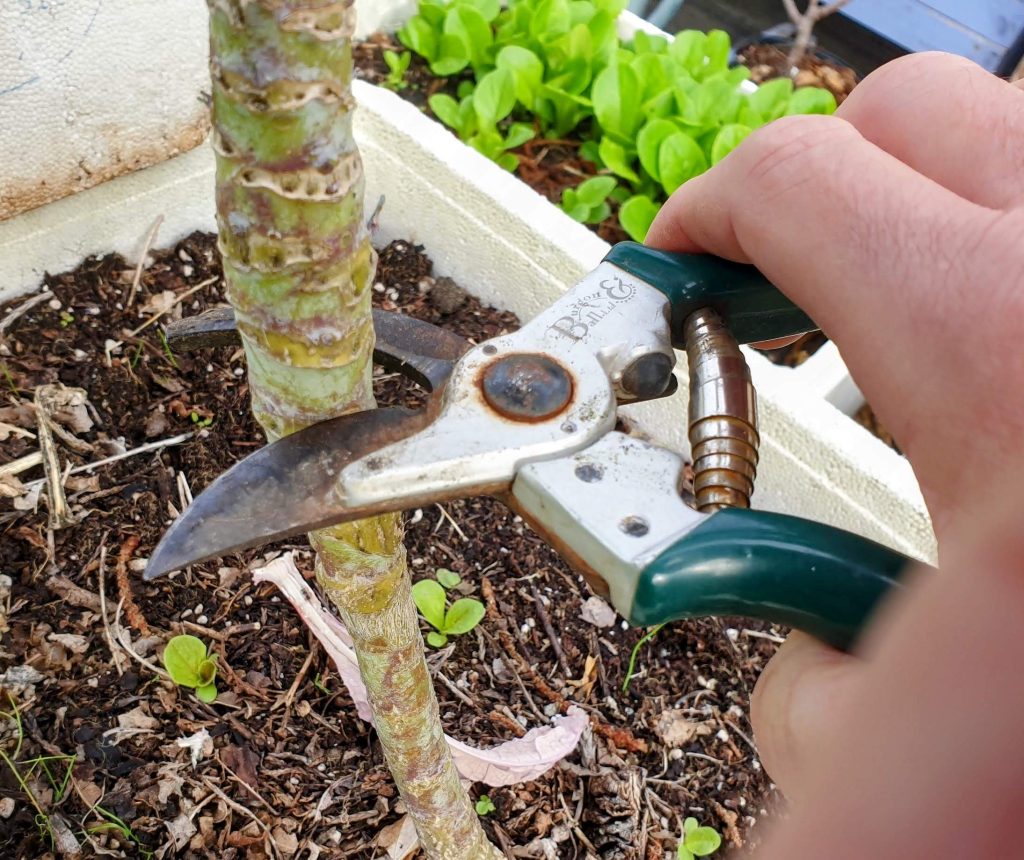
- Secateurs, if you need to cut through the thick stem of kale or the dried flower stem of a lettuce plant.
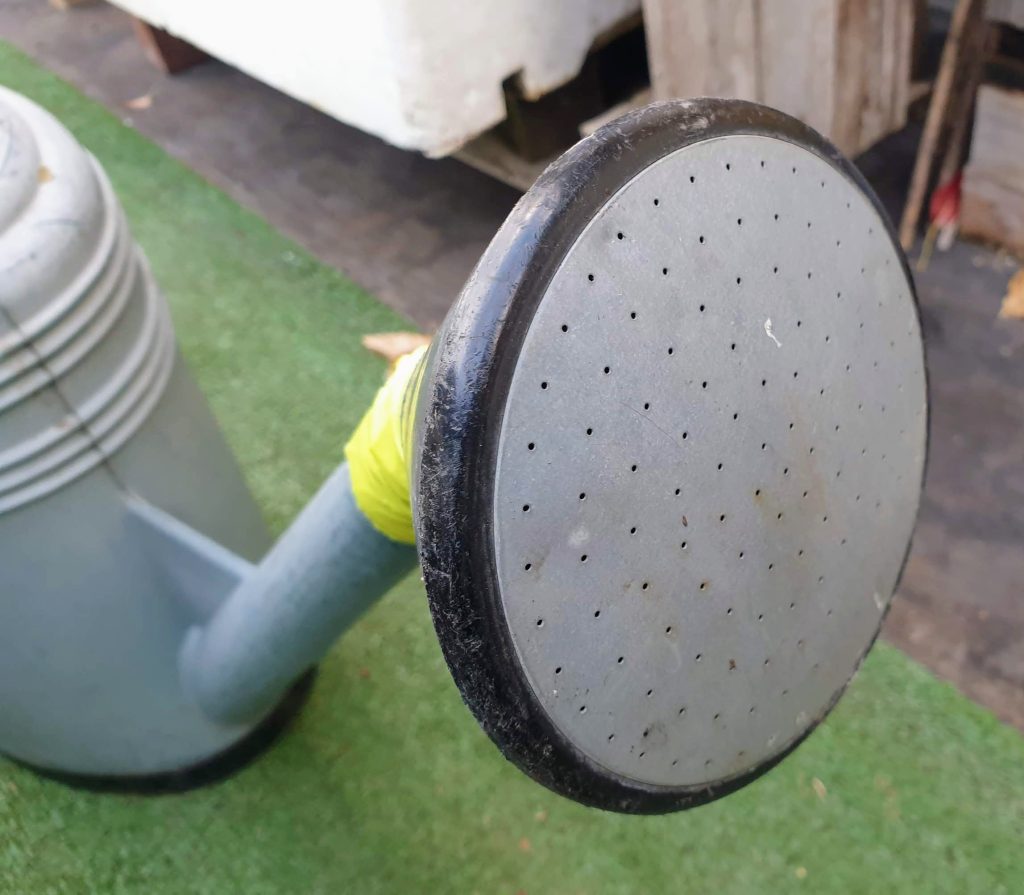
- Watering can. Buy one in plastic or metal that is comfortable to carry full of water. One litre of water weighs 1 kg. Don’t forget the rose which is the rounded end part with lots of tiny holes.
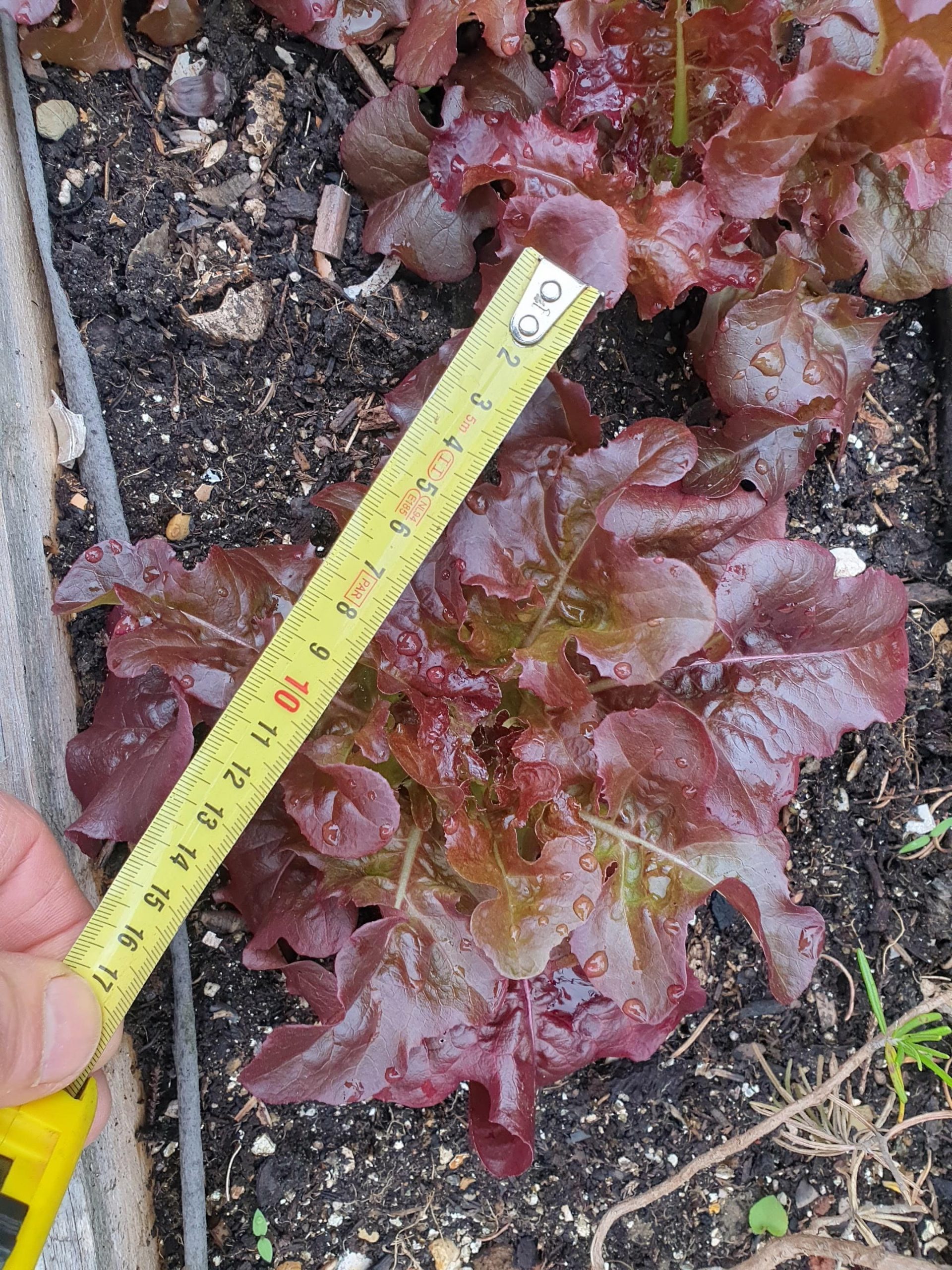
- Tape measure so that you have an idea of space when you’re planting. Space is important between plants so they can grow properly. Lettuce is mostly planted between 15 and 25 cm apart from the centre of each plant depending on how large you want your plants to be.
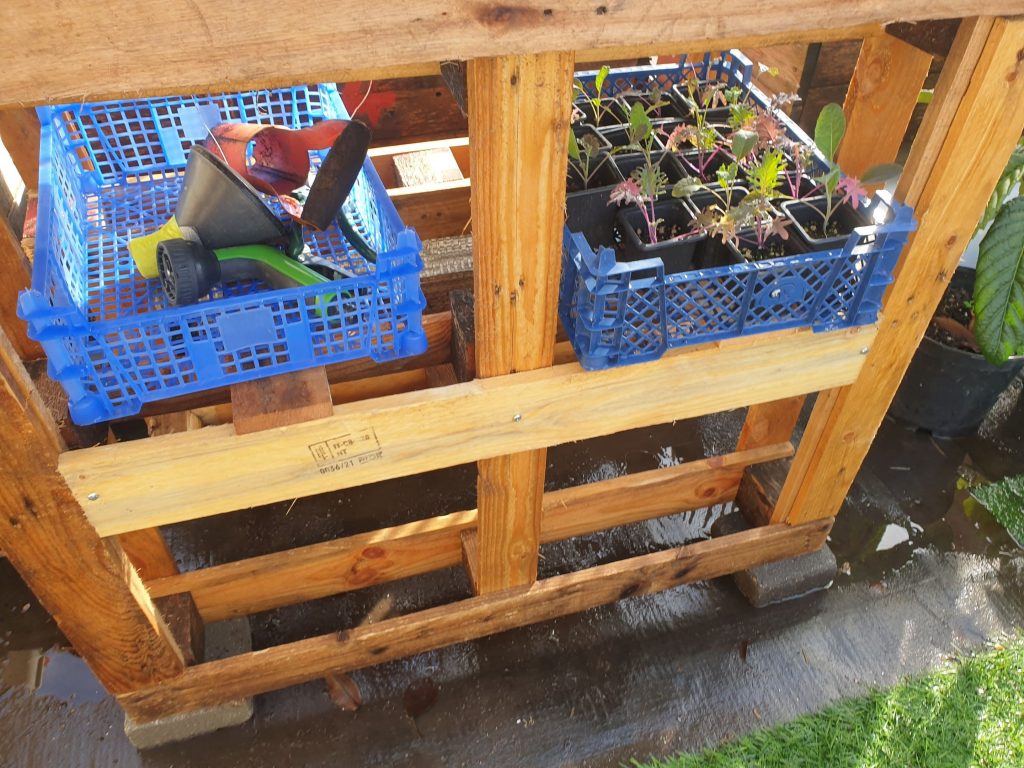
- Plastic crates for transporting small potted plants or for storing garden tools.
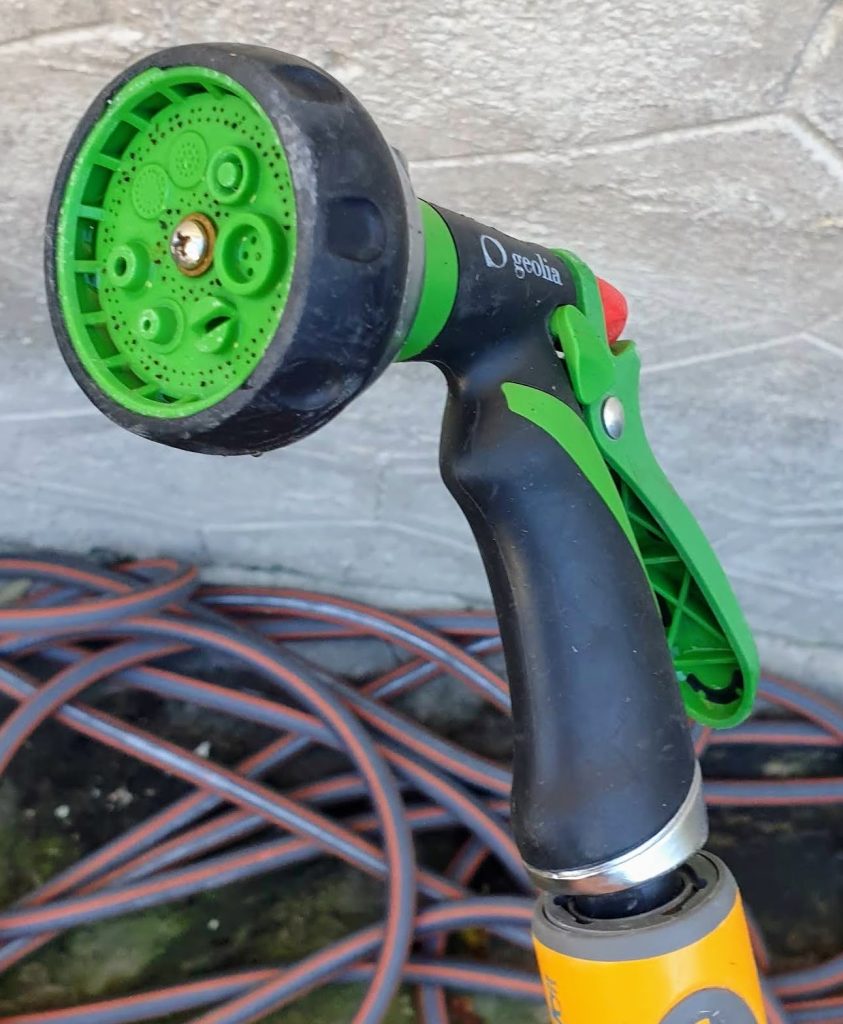
- Garden hose, if you have an outside water tap is very useful especially if you have a large number of containers to water, just make sure it’s long enough. Attached to the hose is a nozzle. Get one with plenty of spraying options. You’ll need for example a strong and powerful jet to wash away aphids from your lettuce and a fine mist to gently water seedlings and everything in between.
- Scissors for precisely snipping off a damaged leaf or harvesting your culinary herbs.
Additional DIY tools 🔨
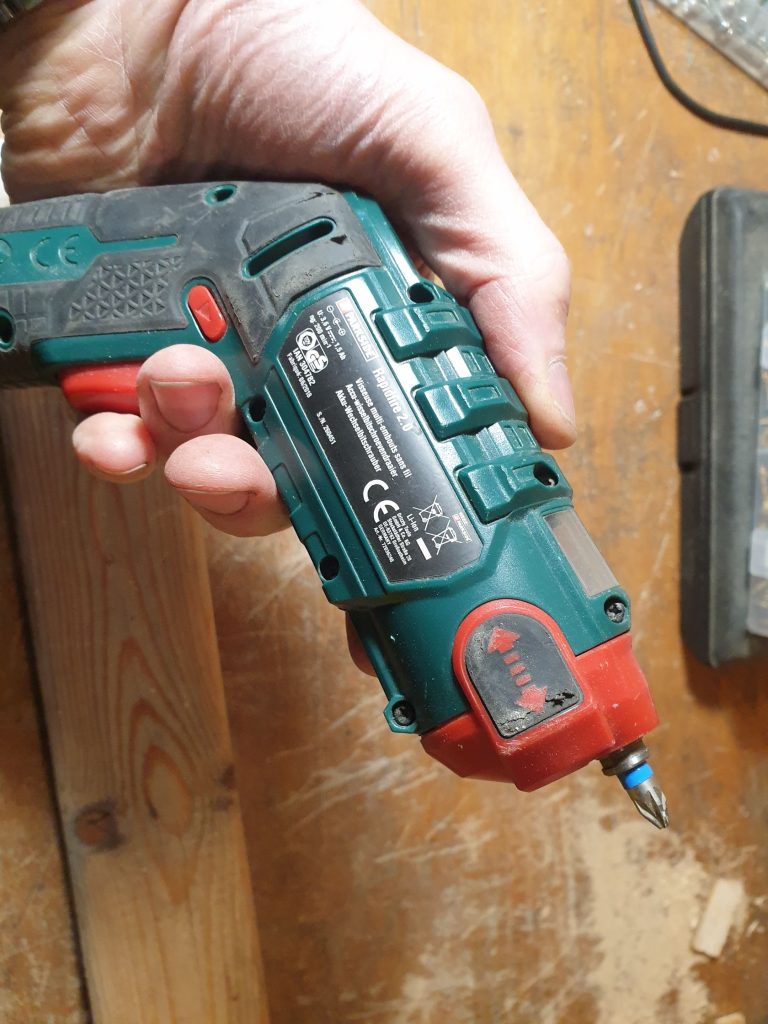
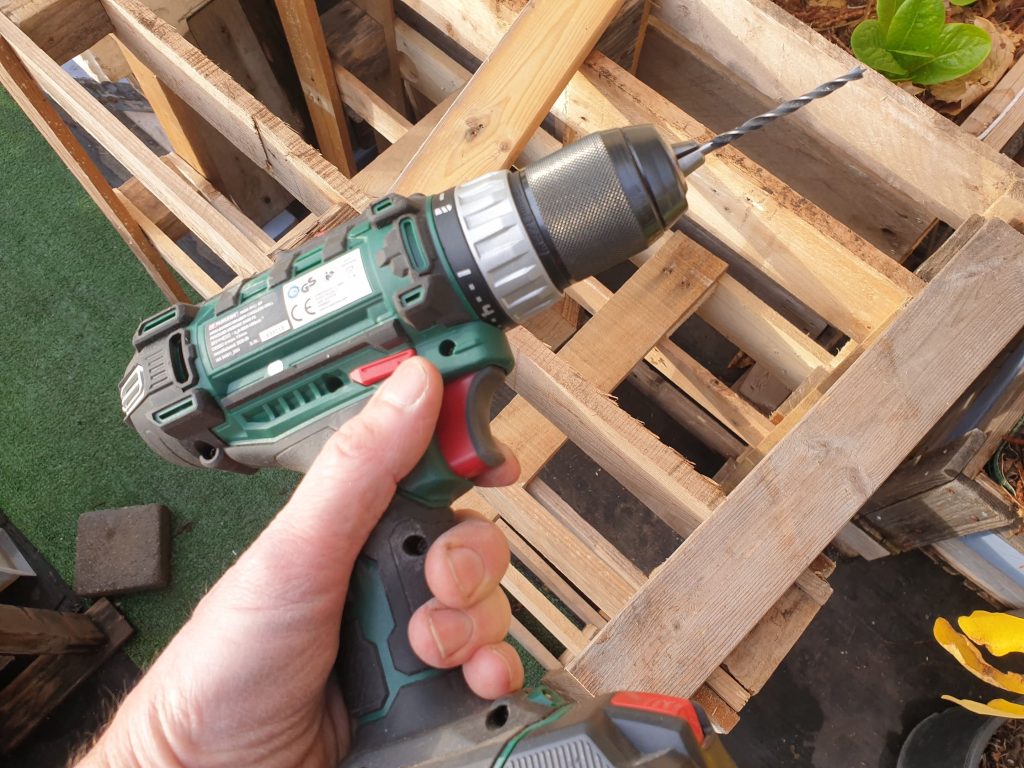
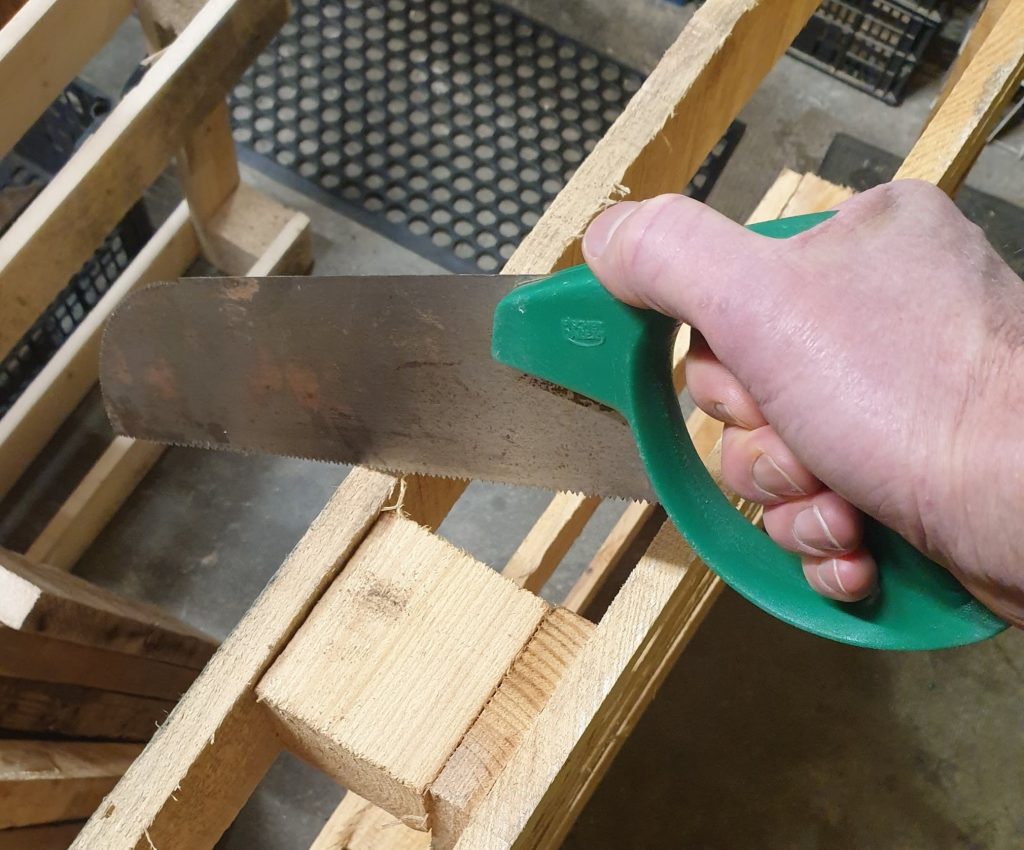
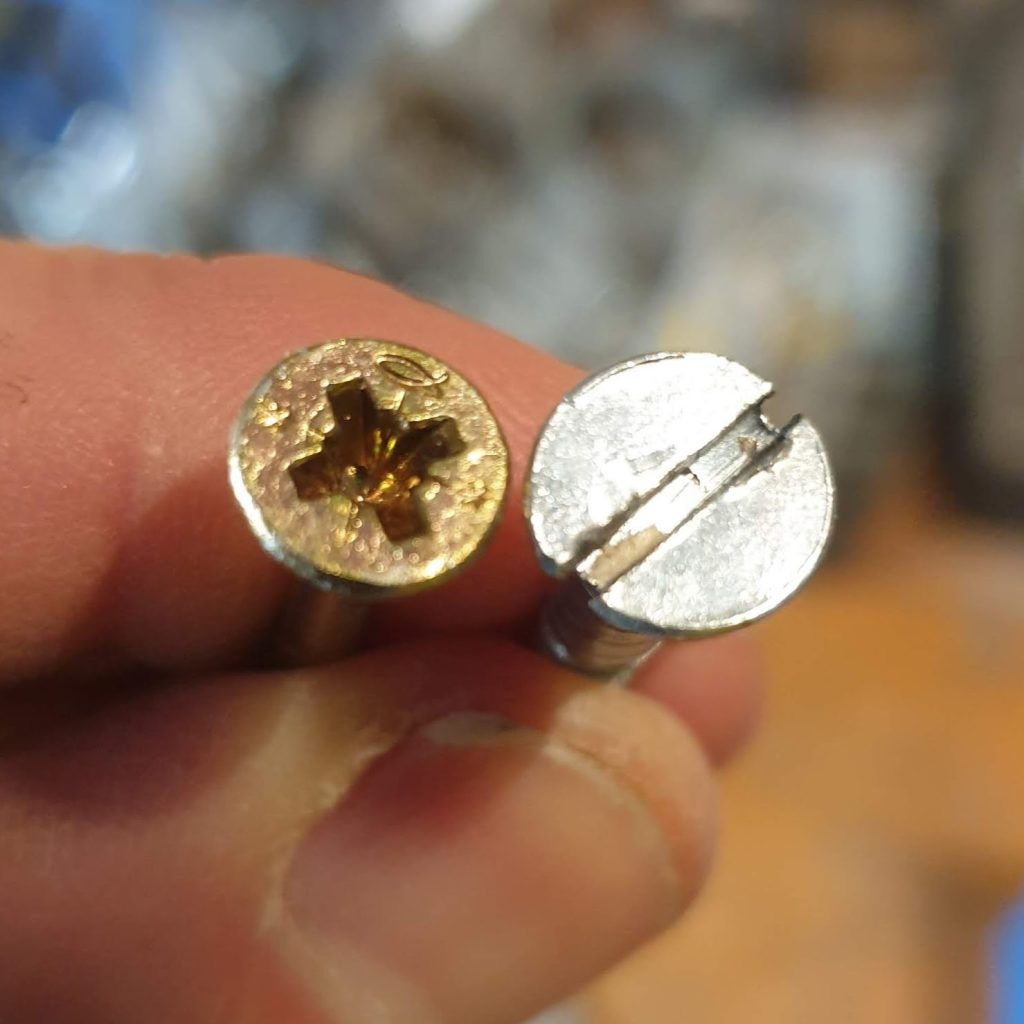
You’re going to be building some simple structures by fixing 2 wooden pallets together for each lightweight foam box container.

To do this, you’ll need the following items:
- Power drill
- Electric screwdriver
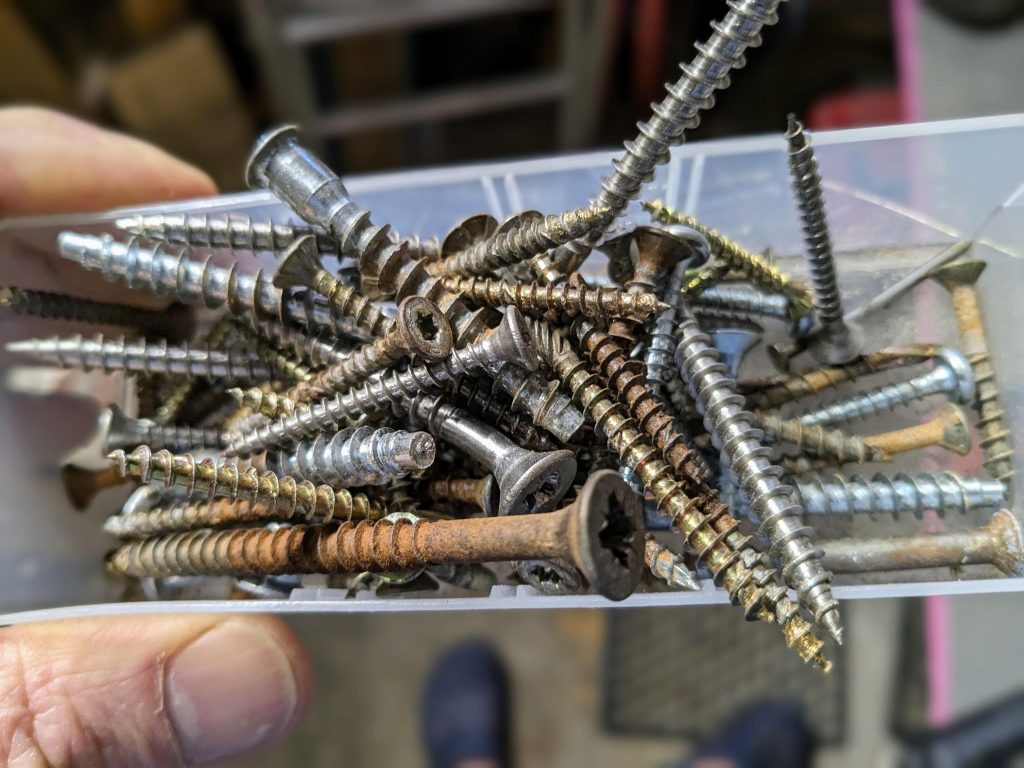
- Screws
- Wood saw
An electric screwdriver is a must have tool when you’re using long screws and especially if you need to unscrew them.
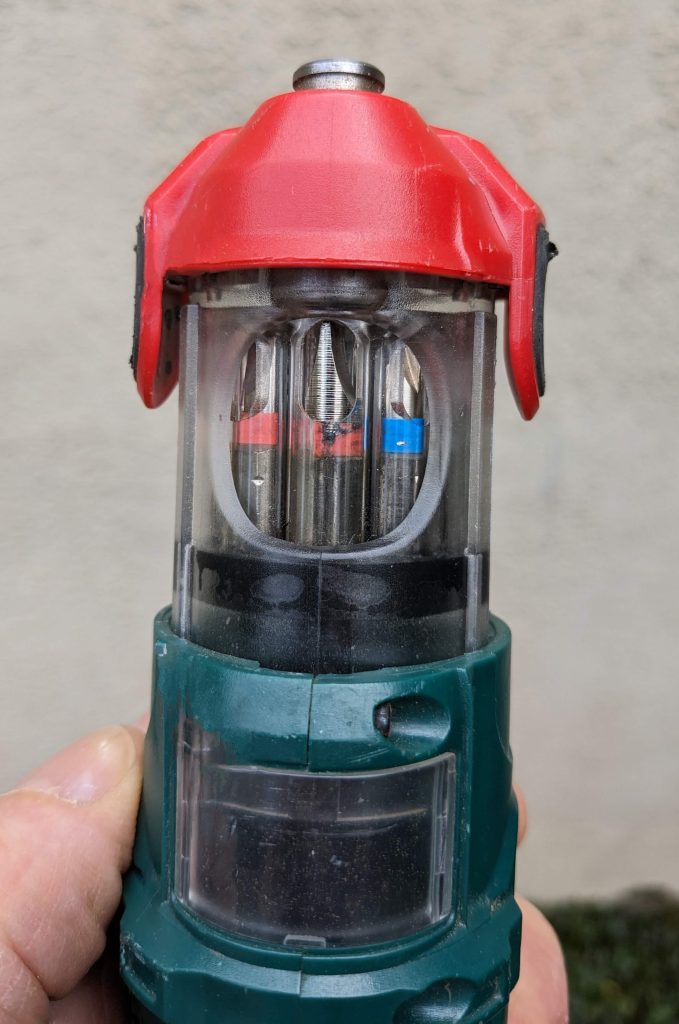
This screwdriver has a handy quick change barrel with multiple screw bits, useful if you have a mixed stock of different screw heads in your collection
A power drill can be either battery powered or tethered with a cable and can be used as a screwdriver too
For screws, I have a strong preference for star shaped heads which give a good grip. Slotted heads tend to slip if you’re not careful or apply too much pressure.
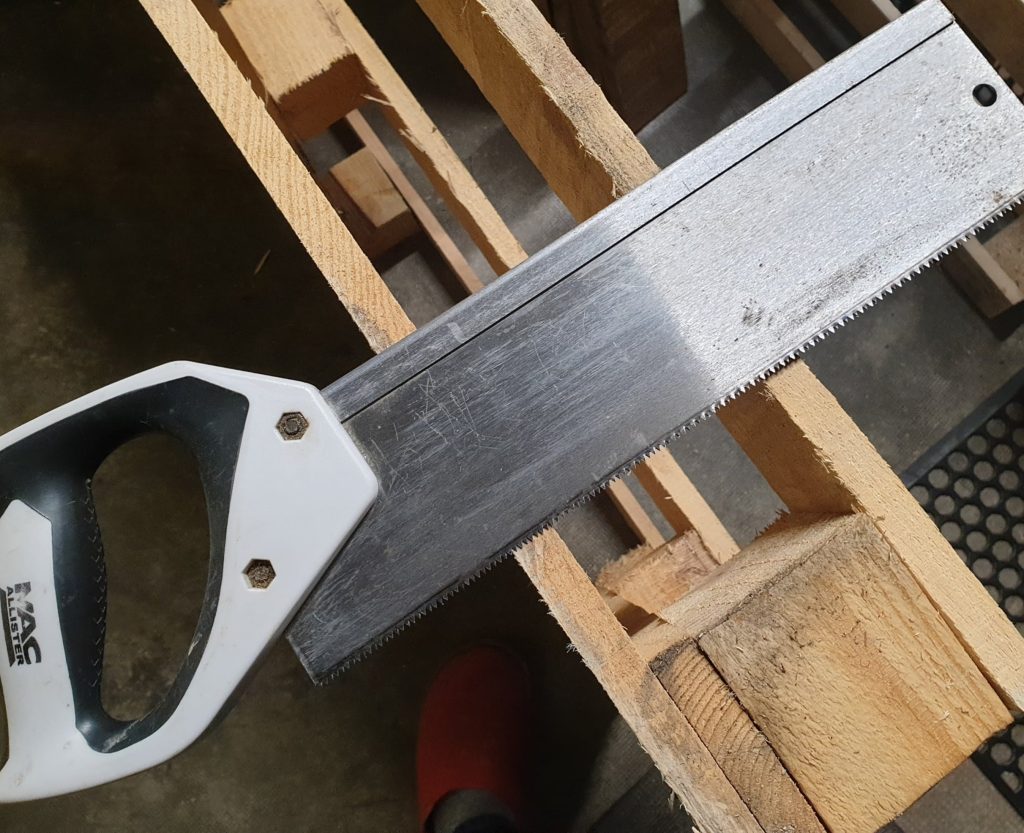
Wood saws with raised edges along the top blade provide rigidity but are a big hindrance when cutting through wide pieces of wood.
Up next – Finding The Right Location For Your Container Garden