

Plants have two fundamental needs without which they will struggle to grow, sunlight and water. Finding the right location for your container garden is vitally important if you want to get your plants off to a good start.
Sunlight, the first and foremost of those needs will dictate where you should put your container garden.
Just as important is water. But with water you have the option of putting your plants near your water source or, bringing the water to your plants.
The beauty of container gardens is that as long as you can meet the requirements of space, sun and water, they can be anywhere you like. All in one place or spread out everywhere around your property.
What you’ll learn 🧑🎓
Choosing a location 🔝
An apartment balcony big or small is an ideal location for your container garden. If you have a privacy screen attached to the railing, your plants will be protected from cold or hot drying winds and driving rain. Your building’s walls will reflect light during the day which is useful if your balcony is somewhat shaded. The heat from your apartment will create a micro-climate during the colder months.
Do you have a flat top garage roof like this one below? Is the structure made of wood or concrete? Can you walk on the roof without it creaking and feeling like you’re going to go crashing through?


The roof in the photo left is covered with a petroleum based membrane which is resistant to being walked occasionally but susceptible to damage from heavy standing objects or excessive wear and tear.
I use wide wooden pieces of wood to spread the load under the legs of my pallets and containers and I lay strips of artificial grass where I walk the most.
If your surface is concrete and made for foot traffic then you’re good to go.
If you own an old house or building with a flat roof or a balcony not specifically designed for a container garden, you might need to consider consulting a structural engineer about whether having permanent plant containers full of wet soil poses a risk of collapse?
You may also need to contact your home insurer to see if you are adequately covered, but if you live in a modern building and you have less than 5 pallet boxes, I wouldn’t bother.


The pallet and fishbox setup weighs relatively little compared to what a building structure can normally handle and comes in at 35 kg, that’s the weight of a 10 year old child!
2 wooden pallets fixed together 59 cm by 49 cm = 13 kg
1 fishbox container full of wet soil weighs 22 kg
If you live in a high rise building without a balcony, consider asking the landlord for permission to access the roof for your container garden. They can only say no.
An unexpected benefit of having a rooftop garden is that in summer the temperature underneath in my garage is refreshingly cool.
Your landlord living on the top floor of a flat roof building, might be glad to have a rooftop garden above them if they could potentially save money on air conditioning?
Commonsense placement of your container garden 📌
In the diagrams below (my house), placing a heavy container in the middle will cause more structural stress than if placed on the sides close to the load bearing walls


If you’re not sure about the load carrying capacity of your balcony or rooftop, or you don’t want to waste time with building experts or insurers, then just apply some common sense as to where you put your plant containers.

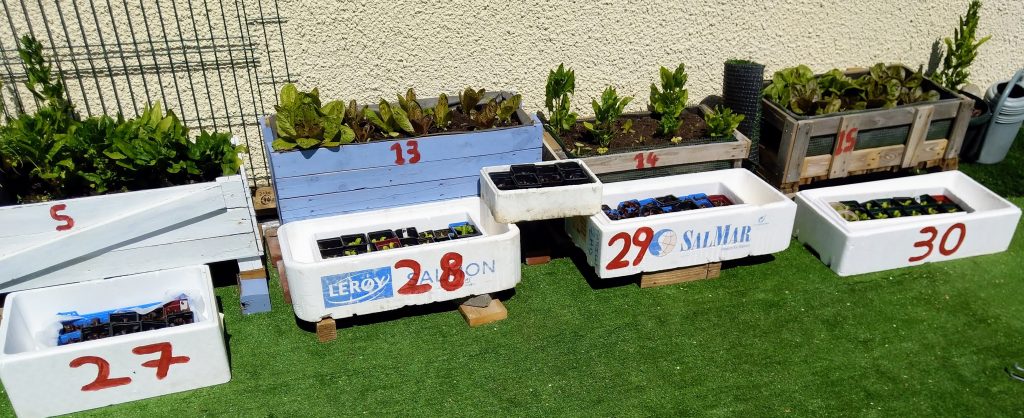
Place your heaviest containers lengthwise as close to your house walls as possible. In the cold of winter, your plants will benefit from the added bonus of heat radiating out from your home.
Photo left, half the weight of this heavy wooden container is pushing down on top of the supporting wall. The big blue container on the left is flush against the house wall and the smaller lighter containers which you can easily lift and carry can be placed further out.
Where is the Sun? 🌞
You might have several options as to where you put your container garden. Like myself you might have a house with a garden and flat concrete garage rooftop. I chose to put my garden on the roof but you might prefer it to be on the ground, watering is a lot easier not having to carry a 15 litre can up an old ladder.

An apartment with a large balcony is a great option too or a paved terrace but the important thing to keep in mind is where is the sun?
Your sunlight exposure is the most important factor to take into account when you’re planning your container garden even if it’s just one container to start with.
As we all learned in elementary school, the sun rises in the east and sets in the west following a southerly trajectory. The best location would be for your plants to face east, south or west but if your balcony faces north, all is not lost.
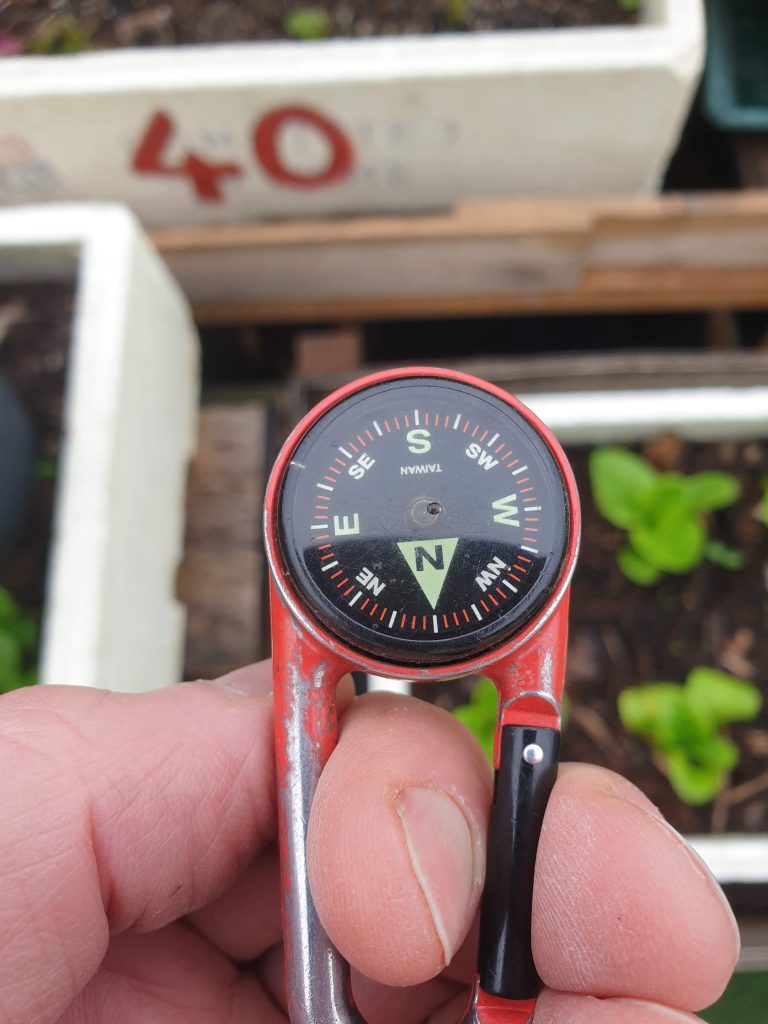
To understand it better, if you’re facing north at sunrise in summer, the sun will warm your right ear until noon, burn the top of your head until late afternoon and warm your left ear towards the evening.
Most garden books say you need at least 6 hours of sunlight per day. It could be morning or afternoon sun.
However there is also the question of indirect sunlight. This is light which is reflecting off buildings or objects. Indirect sunlight is just as useful and many plants can thrive in this sort of environment.
Let’s say you have a small balcony or patio facing east with morning sun (the sun always rises in the east) until about 1 pm
This might be up to 6 hours of morning summer sun facing east until about noon or 1 pm. The sunlight is then likely cut off by the configuration of your house or building.
Unless you live in the open country it’s rare to have direct sunlight without some obstruction like a building, walls or vegetation
In the summer heat, some plants like lettuce will grow better with a little shade but in the colder temperatures of autumn and winter, full sun will be better.
This is the beauty of containers, you can move them to different positions, more sun or more shade. Look at the drawing below to see what I mean.
Imagine you’re looking at a building from the top and each side has a balcony.
Balcony 1 at the bottom facing north will get some morning summer sun from the east and maybe some late afternoon sun from the west until sunset on one corner (x)
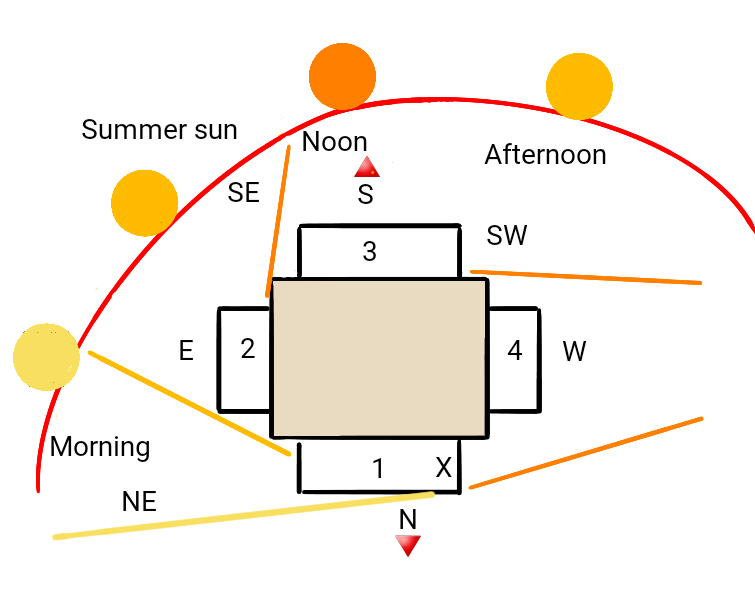
Balcony 2 on the left facing east will get morning sun until the beginning of the afternoon.
Balcony 3 on top is my actual garage rooftop garden facing south, it will get morning sun from the east until sunset facing west.
These scenarios will be dependent on the configuration of your building and other buildings nearby. If your growing space doesn’t get any direct sunlight, don’t despair!
It’s important to remember that your plants don’t have to receive light directly, your garden can receive reflected light from an opposite wall especially if the wall is made or painted in a light colour.
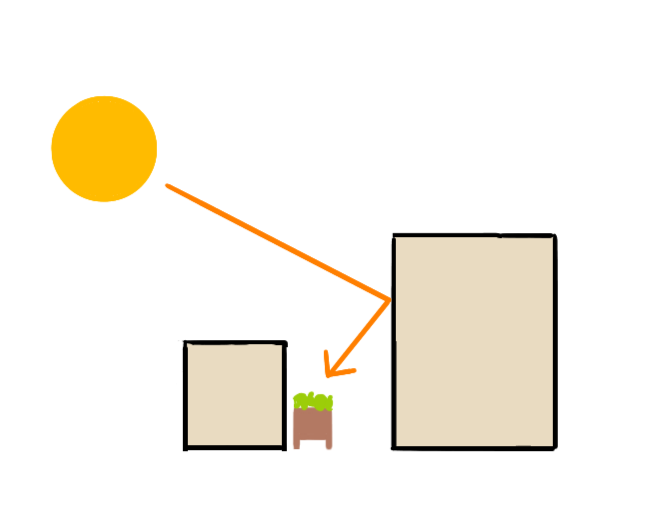
If you don’t believe that plants can grow without direct sunlight, look at the photos below.
Having just replanted some tiny lettuce plants, I was due to leave for a 2 week holiday. My kind neighbour agreed to water my plants but could not otherwise intervene. They would have grown perfectly in full sun but if my neighbour forgot to water them, they could easily have perished.
To avoid any risks, I placed these tiny lettuce plants against a north facing wall with no direct sun and less chance of the soil rapidly drying out.

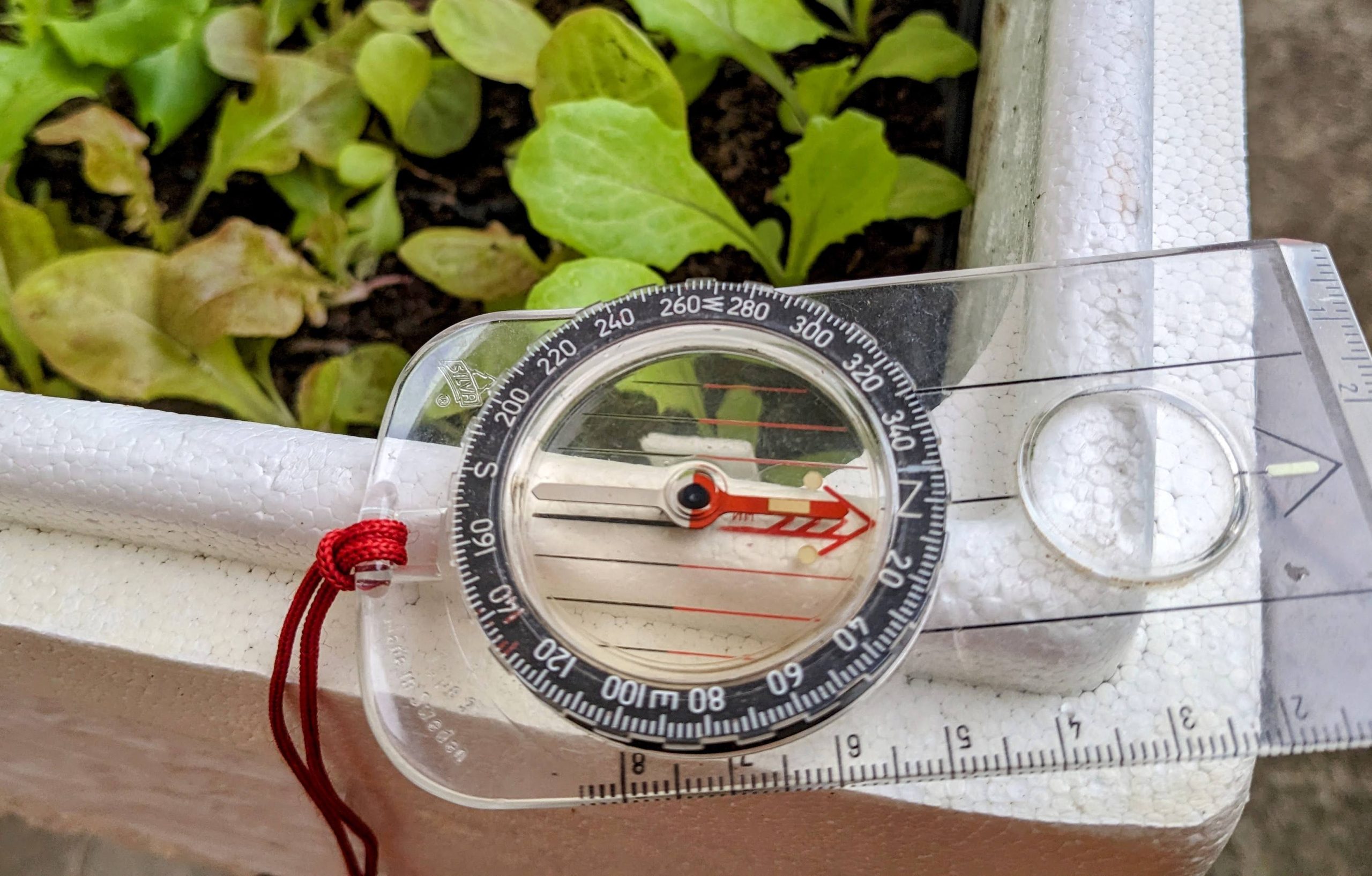


Returning from holiday, they’re looking healthy and almost ready to plant outside.
A quick word about watering 🚿
Wherever you decide to put your container garden, think a little about what you are going to do about watering your plants.
Do you have access to water from an outside tap or even better, rain water from a barrel?
Are you able to lift a heavy can of water? On my rooftop, I have 40 containers of varying sizes and in the heat of summer, the water needs can be colossal using up to 300 litres of water once or twice per week.
I also carry a heavy watering can up an old ladder, 15 kg when it’s full. I’m quite fit, but not everyone would want to do it.
An outside tap might be more practical and your plants will still thrive with tap water. You can easily attach a hose to a tap and you’ll get the option of automatic watering systems too.
Up next – Install your Pallet Salad Garden