
What you’ll learn 🧑🎓
What are fish boxes? 🐟+📦
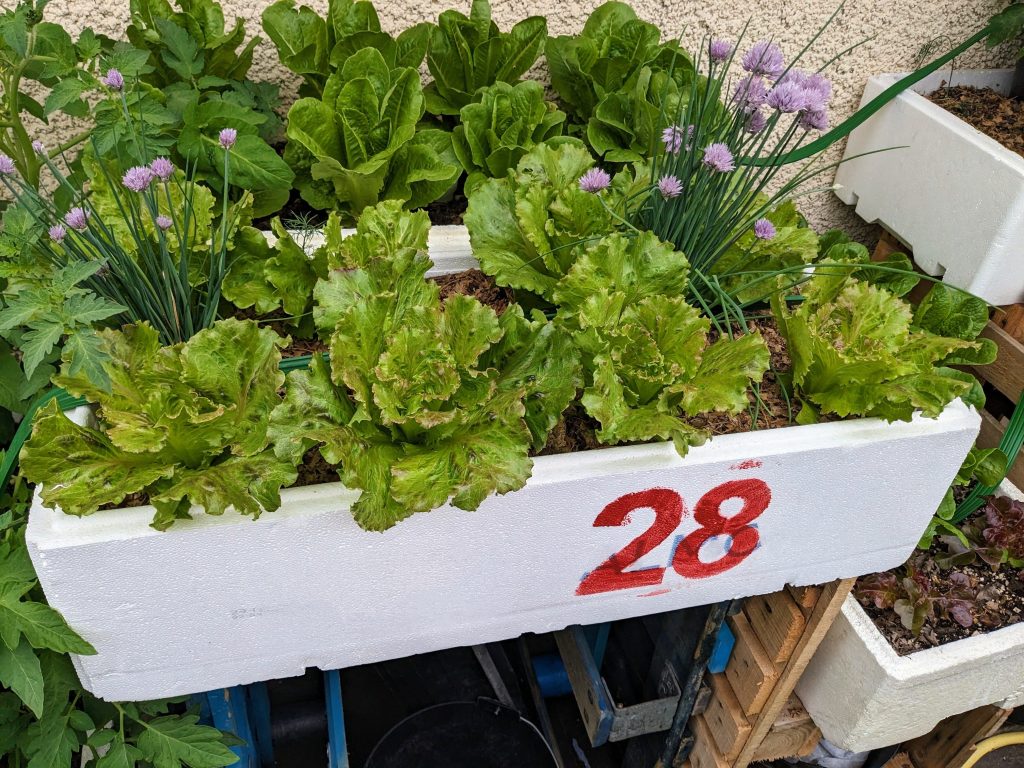
My preferred plant containers are fish boxes but what are they and why use fish boxes for growing plants?
Fish boxes are made of polystyrene foam which are food safe. They’re the type used in the food industry to package, transport and keep fish and meat fresh.
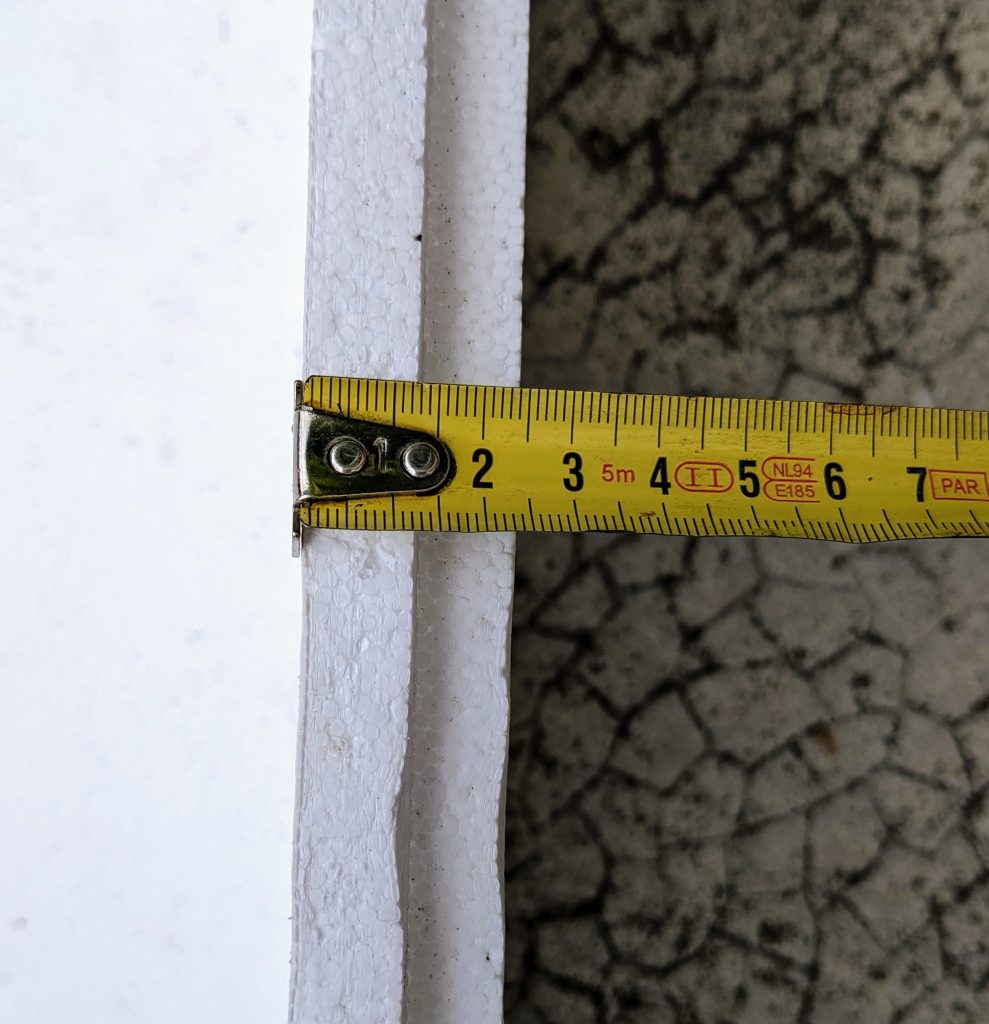
Made of 98% air and just 2% polystyrene, they’re extremely lightweight, strong and with a thickness of 2.5 cm, they do a good job of insulating the plant’s roots from heat and cold.
A container that holds soil can be any shape; square, rectangular or round and you can even use an old shopping bag. In my Pallet Garden, the two most important considerations for the type of plant containers I use are the size and the type of material.
@rooftopveg Start A Vegetable Container Garden For Free #gardeningtips #containergarden #organicvegetable #fishboxes #planterboxes
♬ original sound – 🥬 Pallet Salad Garden 🍅
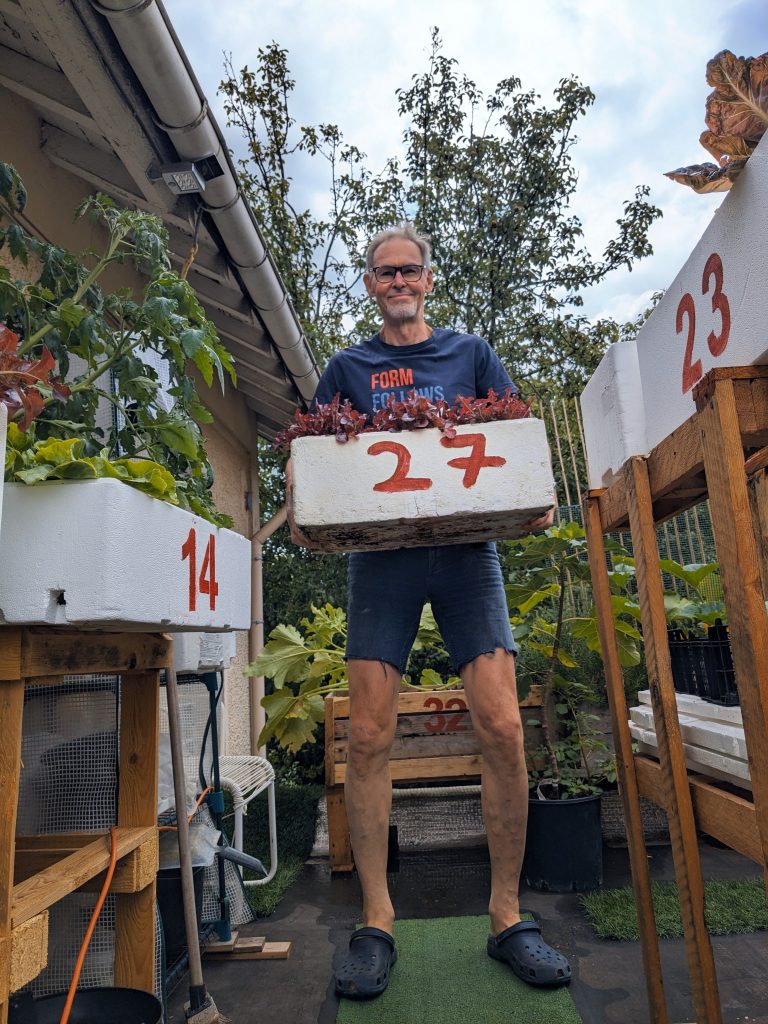
Fish boxes weigh practically nothing and they’re also very rigid. Their strength and rigidity means they can hold 40 litres or 22 kg of potting soil with ease and when they need to be carried, they don’t break apart.
Foam fish boxes come with handy lids which are great for protecting your small seedling plants at night or from a winter freeze.
They also have holes, two at each end which is more than enough. I tend to water my plants in the middle section so that the water has time to soak in. If you bore additional holes underneath, the water will immediately exit which happens all too often when the soil is very dry.
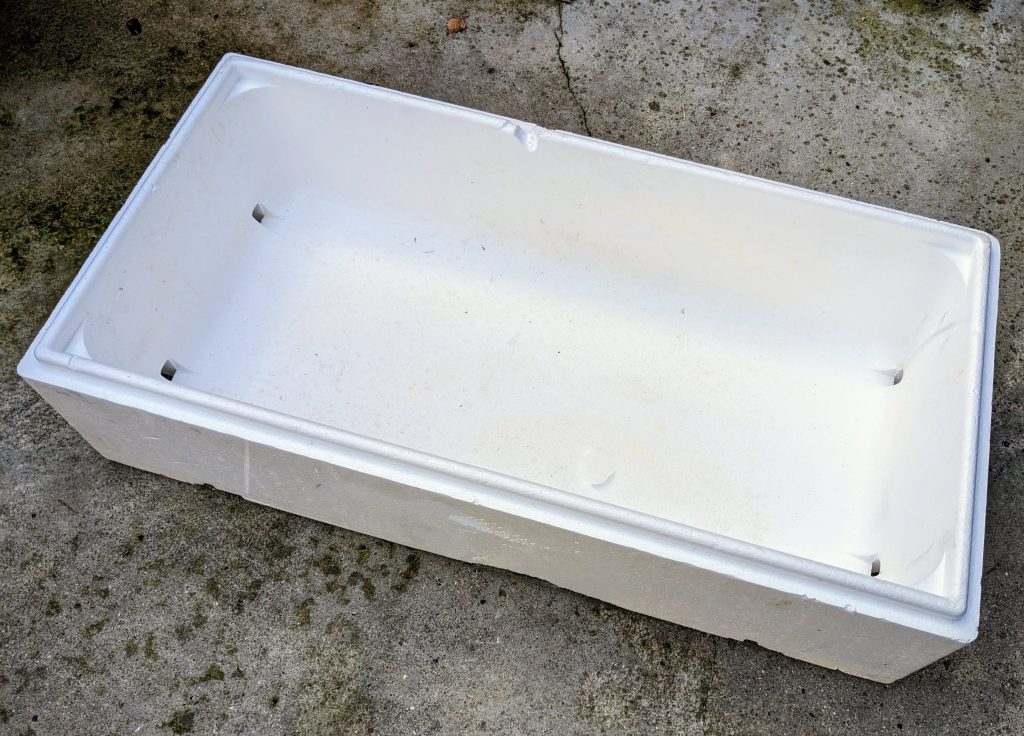
Fish boxes usually have a maximum depth of 20 cm which is deep enough for lettuce and herbs.
If you want deeper containers for plants like tomatoes or zucchini which need more space, it’s easy to cut out the bottom of one box with a heated blade and glue the two boxes together.
You can still use the pallet system with a double box setup by placing it on the centre section instead of on the top.
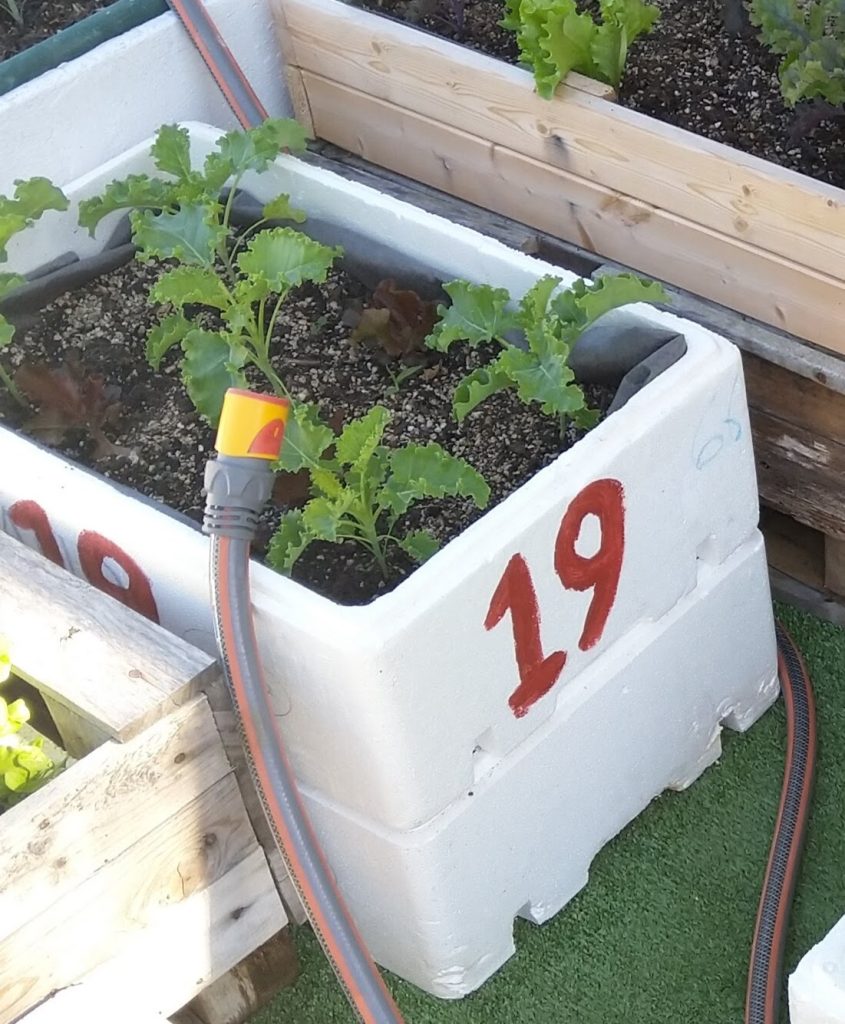
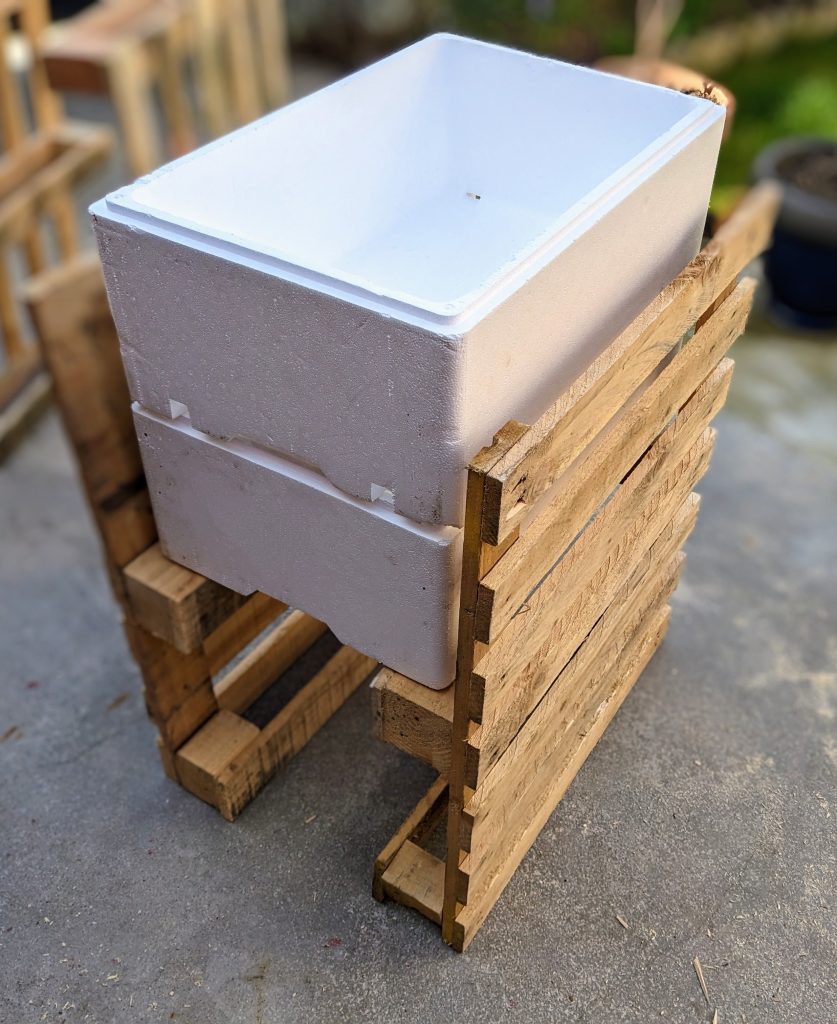
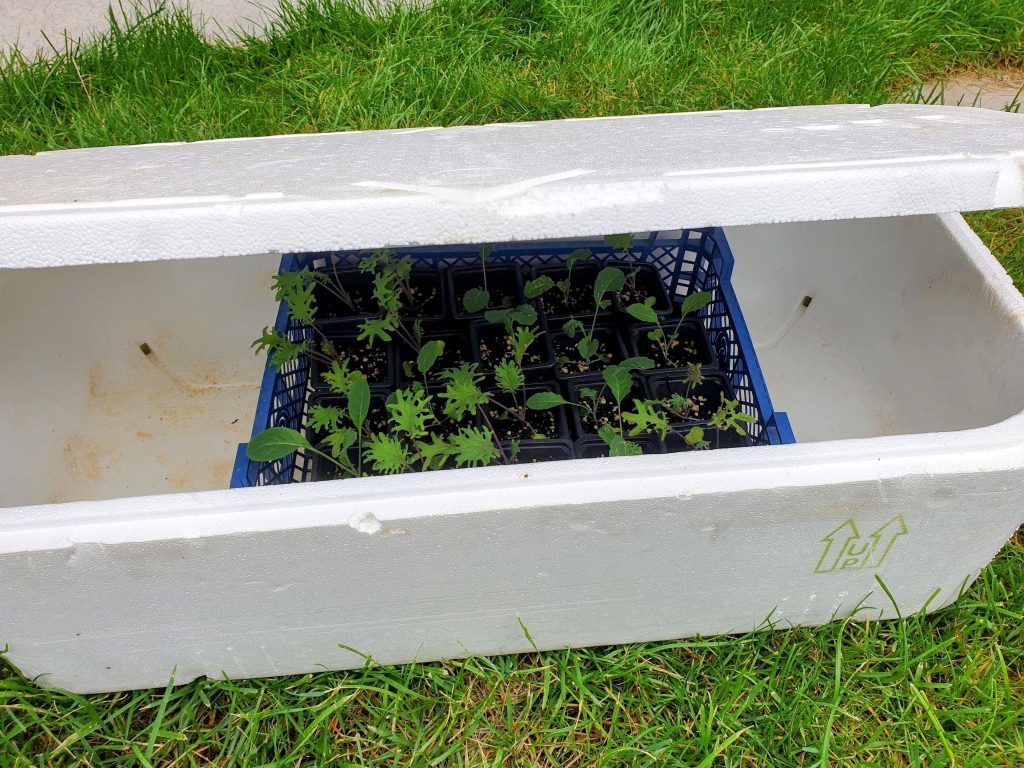
I get my fish boxes from my local seafood restaurant. I don’t ask, l just pick them up when they’re put outside for the trash collection.
Picking up fish boxes like this means they don’t cost you a penny.
If you’re uncomfortable with collecting fish boxes in this way, then just ask the restaurant manager to put a box or two aside for a gardening project. I’m sure they would be happy to oblige especially if you’re a regular customer.
When you get home you’ll need to give the boxes a rinse with some detergent to remove the fish smell. Leave the boxes outside in the sun for a few hours to dry.
You might have concerns about the environmental impact and the sustainability issues of using materials made of non-renewable fossil fuels?
My view is that by not purchasing these boxes, I am not increasing demand for these non-renewable resources, just slowing down the journey from the user to the landfill or waste incinerator.
Nothing is perfect in this world except nature!
Protect your fish boxes ⛑
Fish boxes do have one inconvenience, bits of polystyrene foam fall off when the boxes get knocked or scraped.
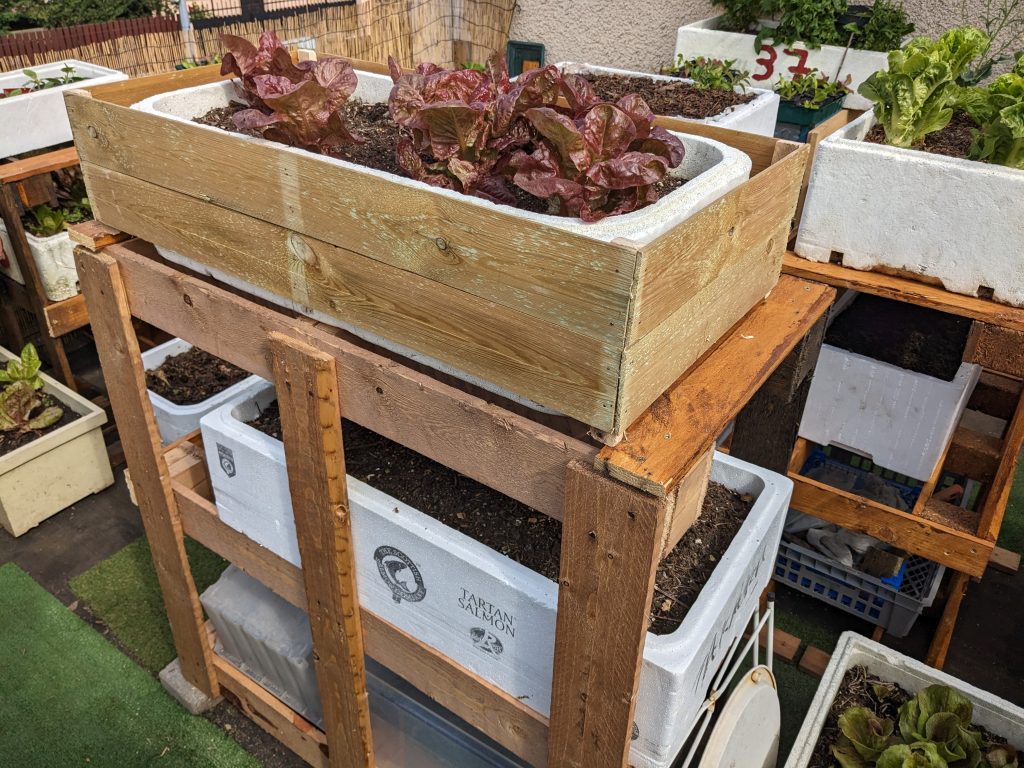
To avoid this wear and tear, you can make a simple protective casing without a bottom section. The casing makes the fish boxes look prettier too.
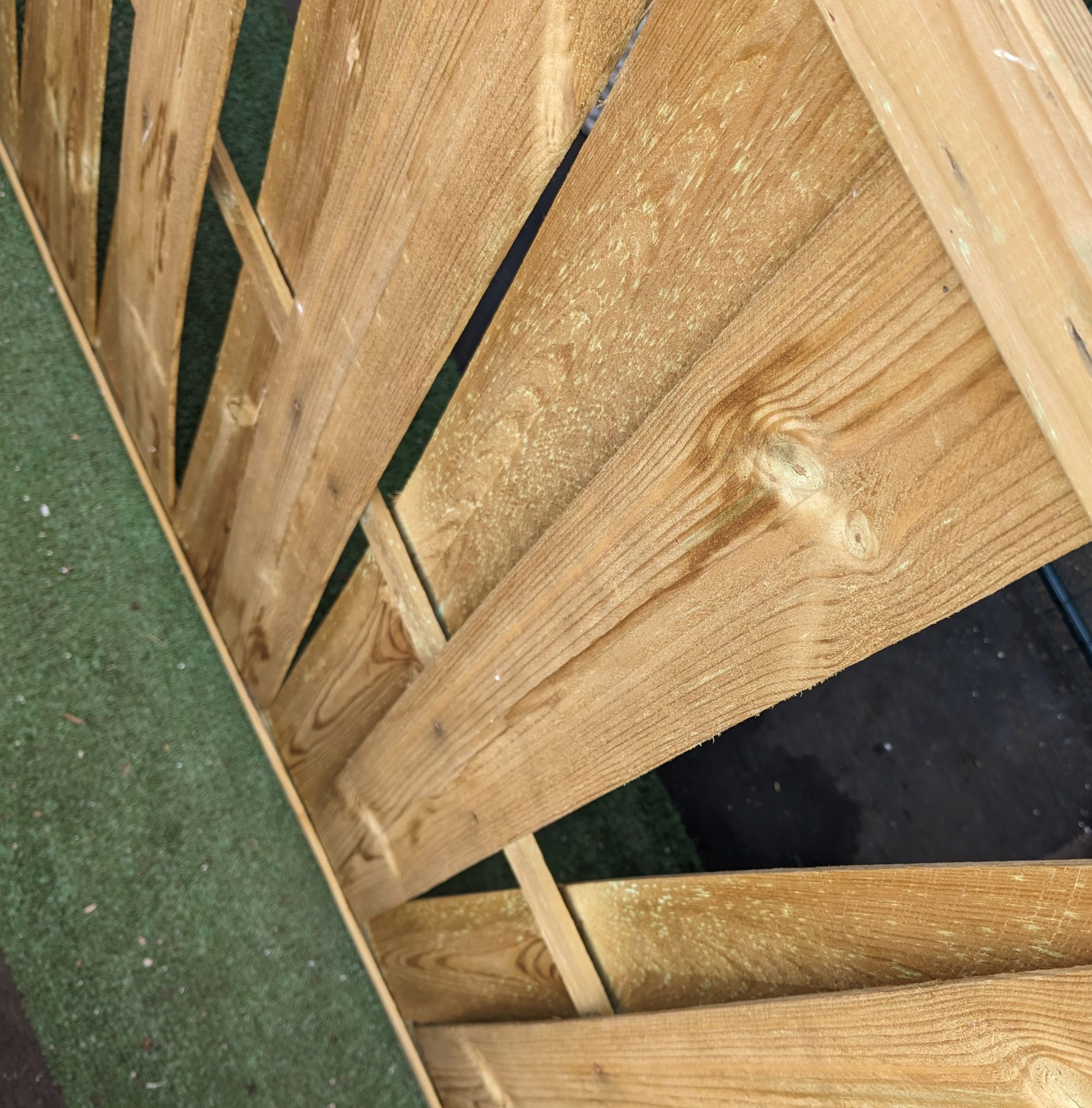

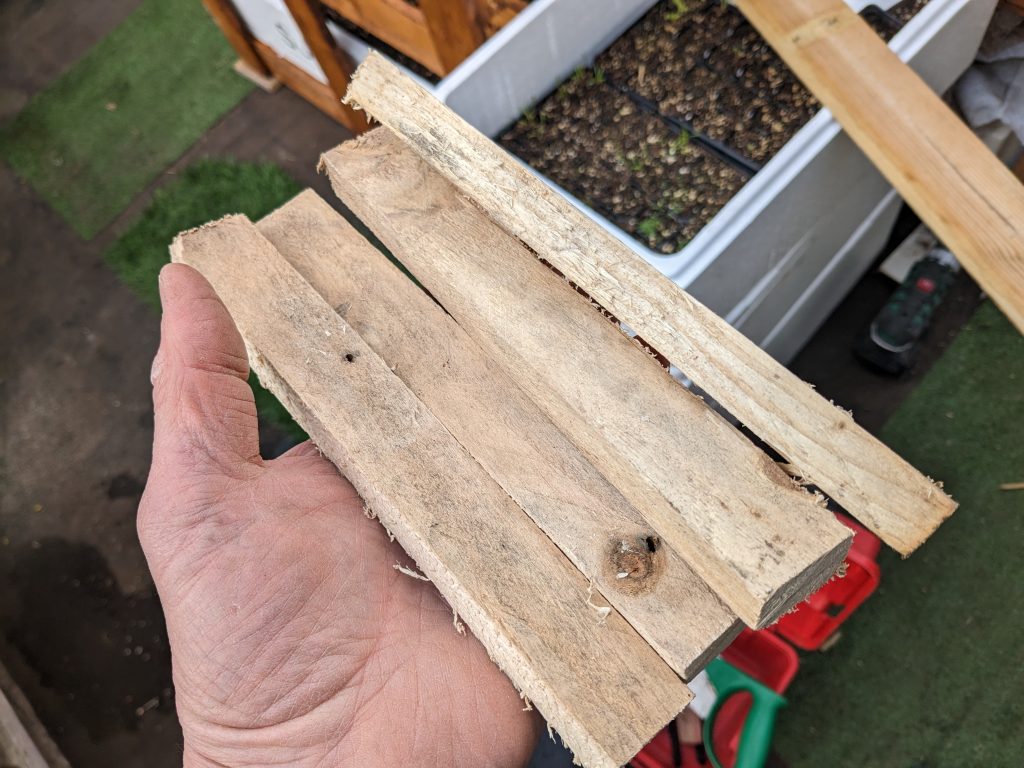
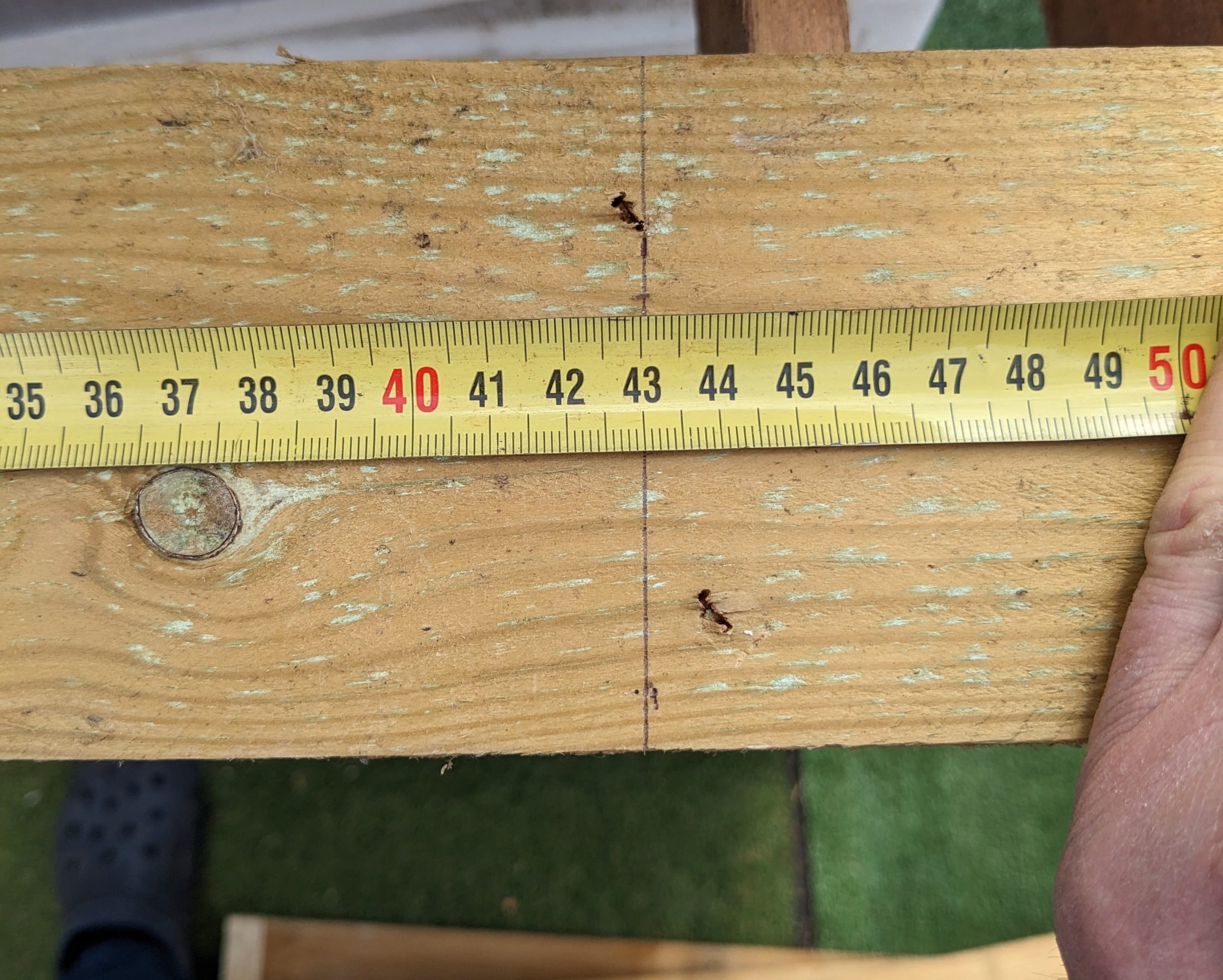
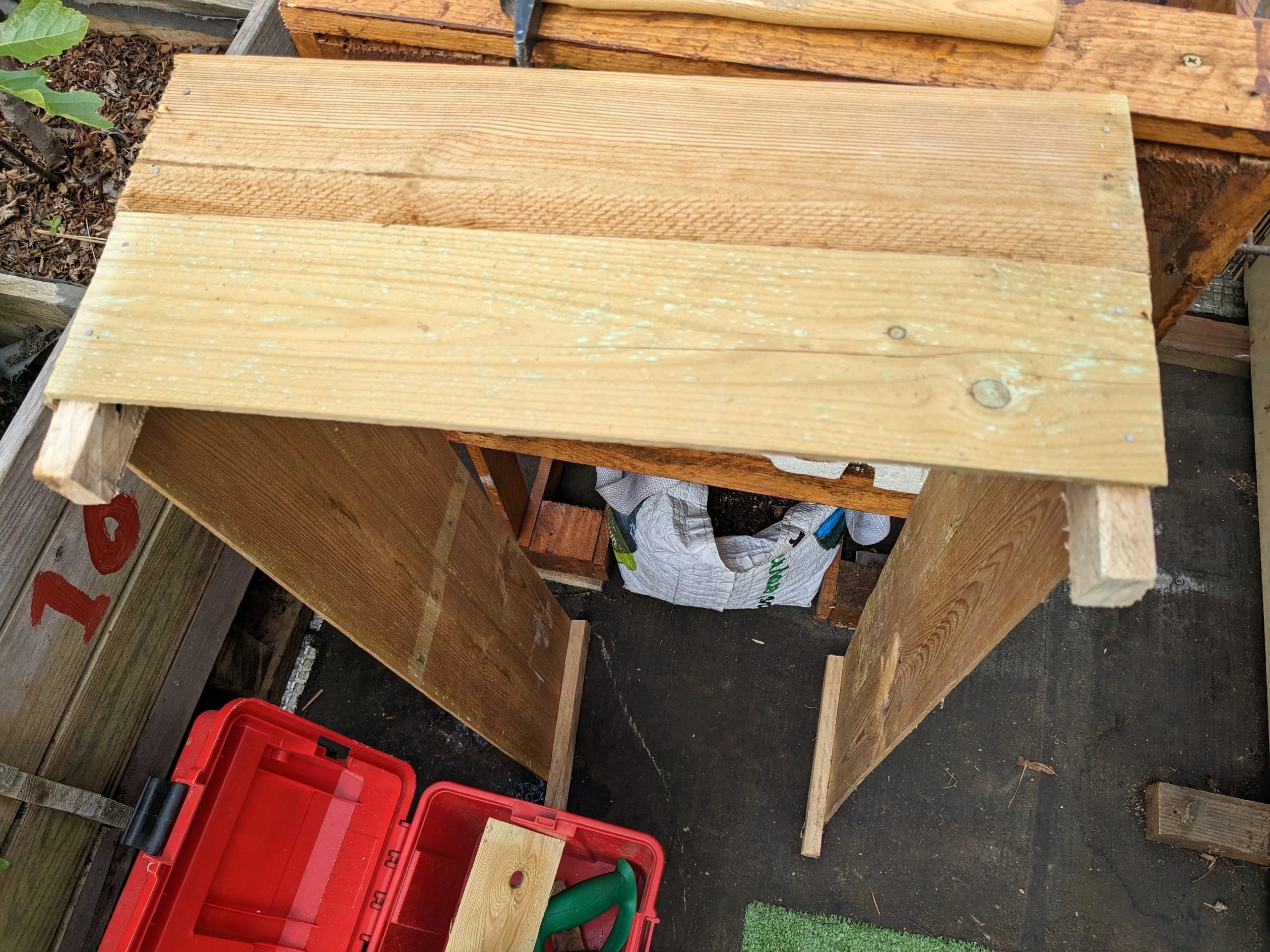
- I used some thin lightweight planks from an old privacy screen.
- The structure is held together with staples and you can remove them with pliers.
- Then cut the corner blocks the height of the fish box container, in this case 20 cm long.
- You must leave a gap all around your fish boxes by adding at least 2 cm to the length and width measurements. In this case, the width of the fish box is 39 cm so I added another 4 cm to make 43 cm (2 cm for each side). The gap will encourage air to circulate and avoid creating damp areas where snails and slugs can hide.
- Fixing the planks together is a bit fiddly to say the least and I used small thin nails 20 mm long.
- Below is the result, what do you think?
I don’t like fish boxes, are there any alternatives? 😏
There are alternatives but you lose some of the advantages of the pallet garden system!
Concrete and clay

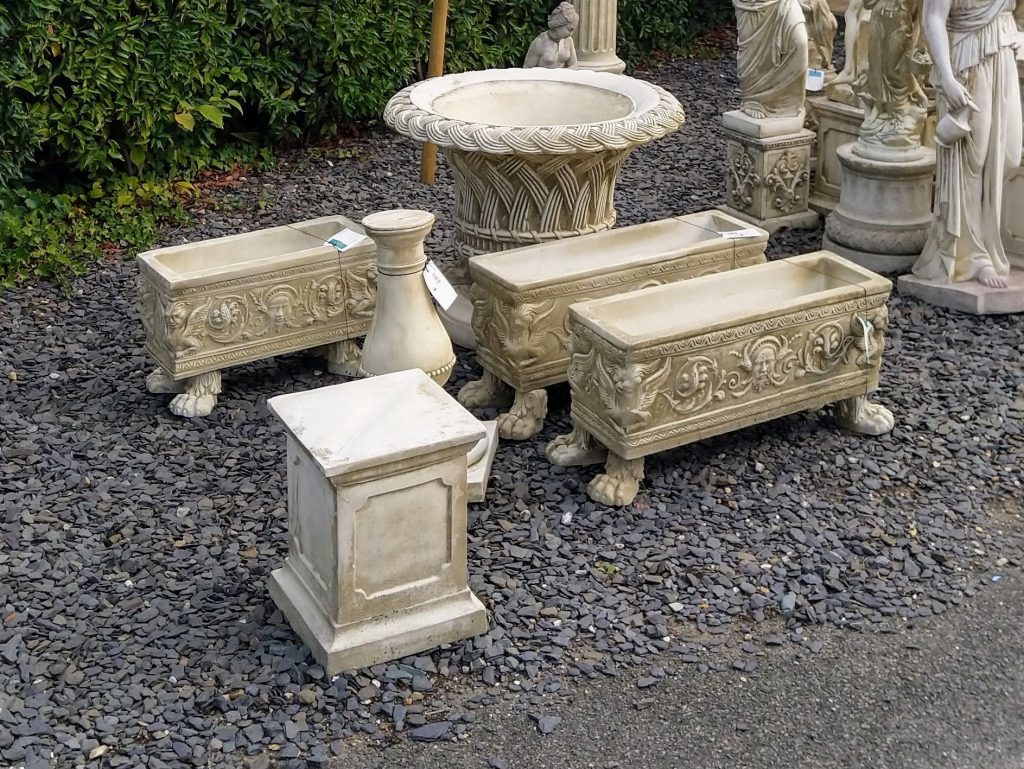
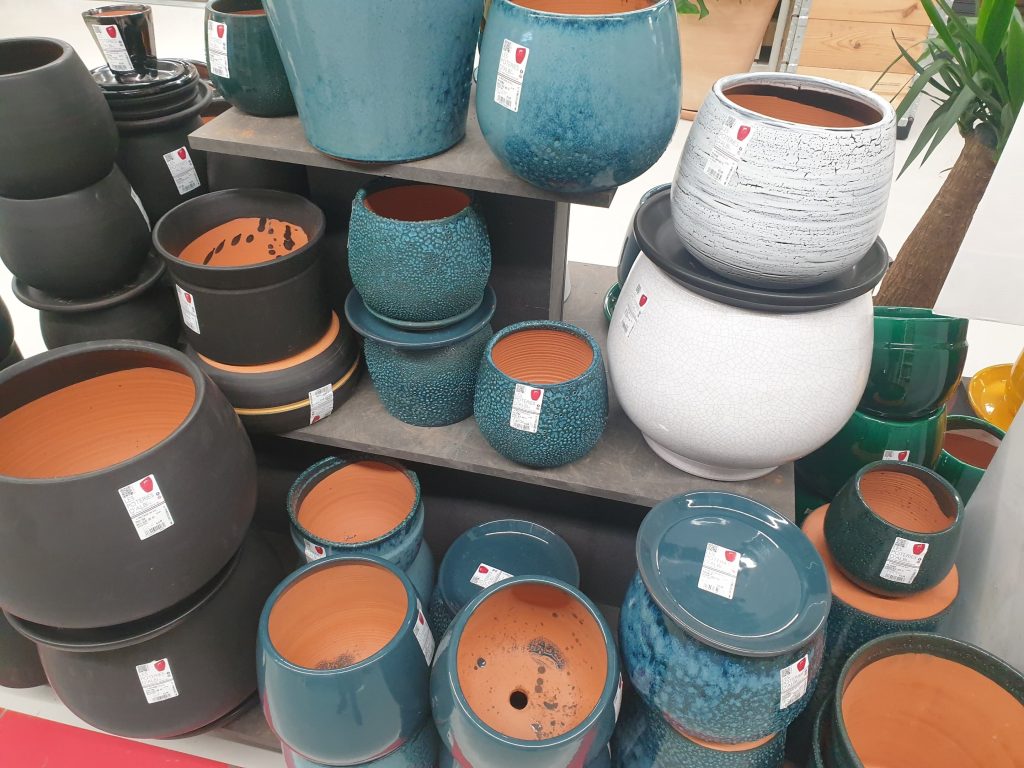
Due to weight considerations, concrete and clay pots are not really suitable for growing vegetables in containers. Concrete containers and pots once full of wet soil will be so heavy you cannot move them. And if you do, you are likely to break them.
That factor alone makes them unsuitable for balconies or rooftop gardens which may be subject to weight restrictions. Clay pots being porous have a tendency to dry out meaning more frequent watering. They’re also susceptible to cracking in freezing weather.
Wood
Wood is an obvious candidate for container gardening being relatively lightweight, weather resistant and good looking.
You should know that wooden containers are not compatible with my Pallet Garden method. They would add 15 to 20 kg of dead weight and be too heavy to put on top of a pair of pallets.


If your growing space is also a place to relax or party, then you might want to have containers that look sleek or pretty like the one on the right. You will need to put bricks, paving stones or rollers on the bottom otherwise the wood will start deteriorating.
My rooftop growing area isn’t meant to be a place to relax in the usual sense.
There isn’t any kind of railing to stop someone falling off the roof but fortunately, it’s only just one floor up from the ground.
Some of my larger containers are homemade from free wooden pallets which I made myself. If you have a creative streak within you, building your own containers is immensely satisfying.
Wood offers good insulation unlike metal or plastic, which are more subject to temperature fluctuations. I also prefer the rustic look.
Instead of pallet wood, you can choose to buy quality timber such as redwood or cedar which is naturally water resistant.
Store bought wooden containers, will have been treated to protect them from the weather. Making your own, you should consider doing the same with varnish, wood oil or paint.
If you do buy a wooden planter box, consider buying one with a trellis attached like the one mentioned above. They provide privacy and are practical if you want to grow some climbing runner beans or cucumbers in the summer.
You can also buy containers on legs which makes tending to your plants much easier. If you find creatures eating holes in your lettuce leaves, it’s easy to check to find any snails hiding underneath.
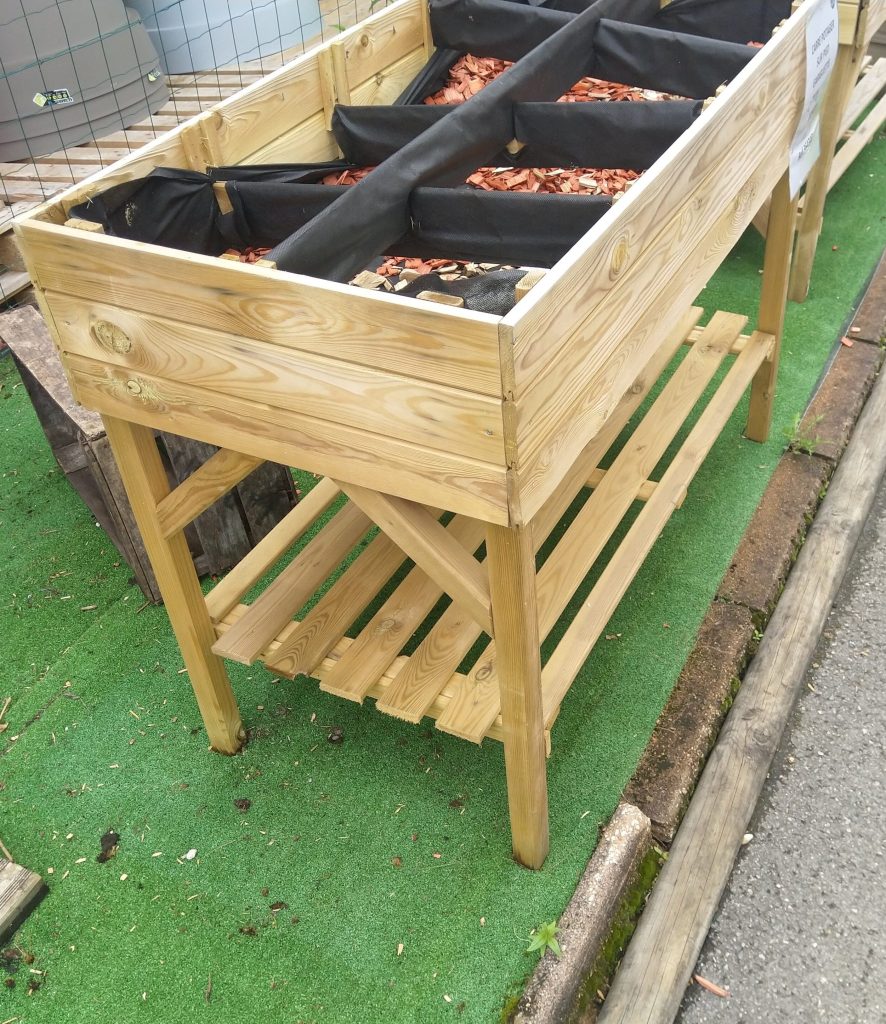
Wooden containers are lined with landscaping cloth to prevent the soil from rotting the wood and prevent plant roots from escaping through the drainage holes.

If you decide to make your own boxes, you will need to add cloth yourself.
There is no need to make drainage holes in the cloth as the water will easily pass through the material.
Plastic containers
I use plastic pots and containers and plastic being relatively lightweight, they can be used instead of foam fish boxes if you prefer.

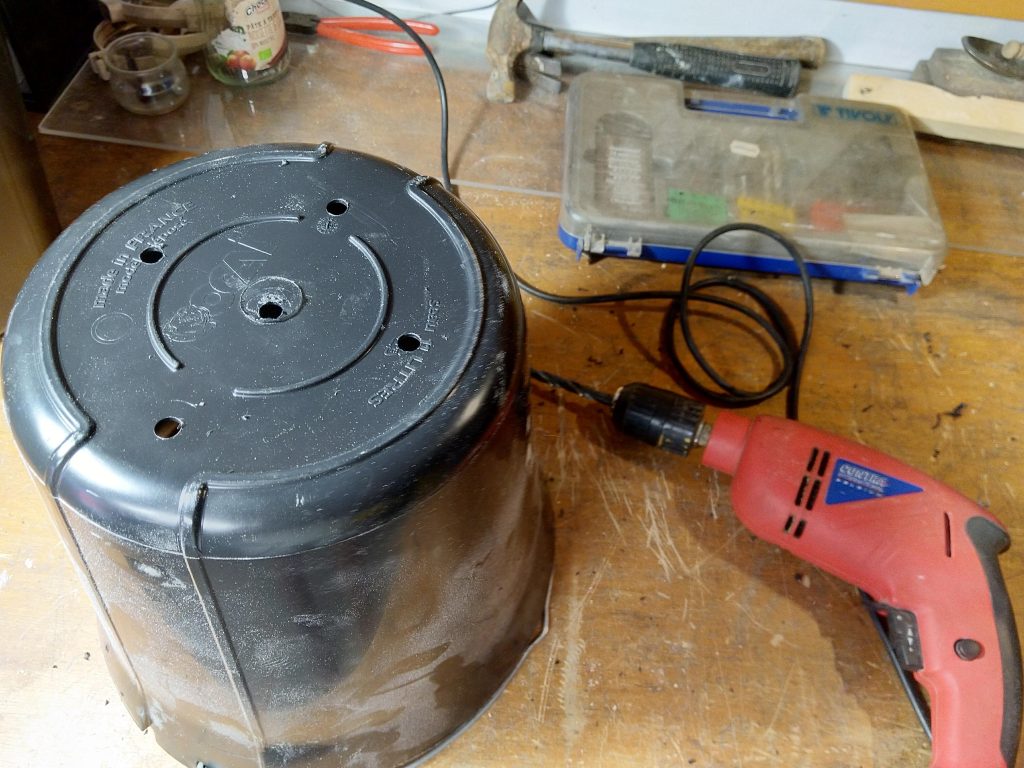
Plastic containers are your traditional round pots and I’ve got hundreds of them. They’re lightweight and durable come in all shapes and sizes and it’s easy to drill extra drainage holes if needed. I use small plastic pots for my seedling plants and bigger round pots for my container fig trees.
Over time under the exposure of sunlight, plastic will degrade, become brittle and be subject to cracking.
Avoid round pots for growing lettuce because the soil will dry out too quickly and you’ll spend all your time watering them.
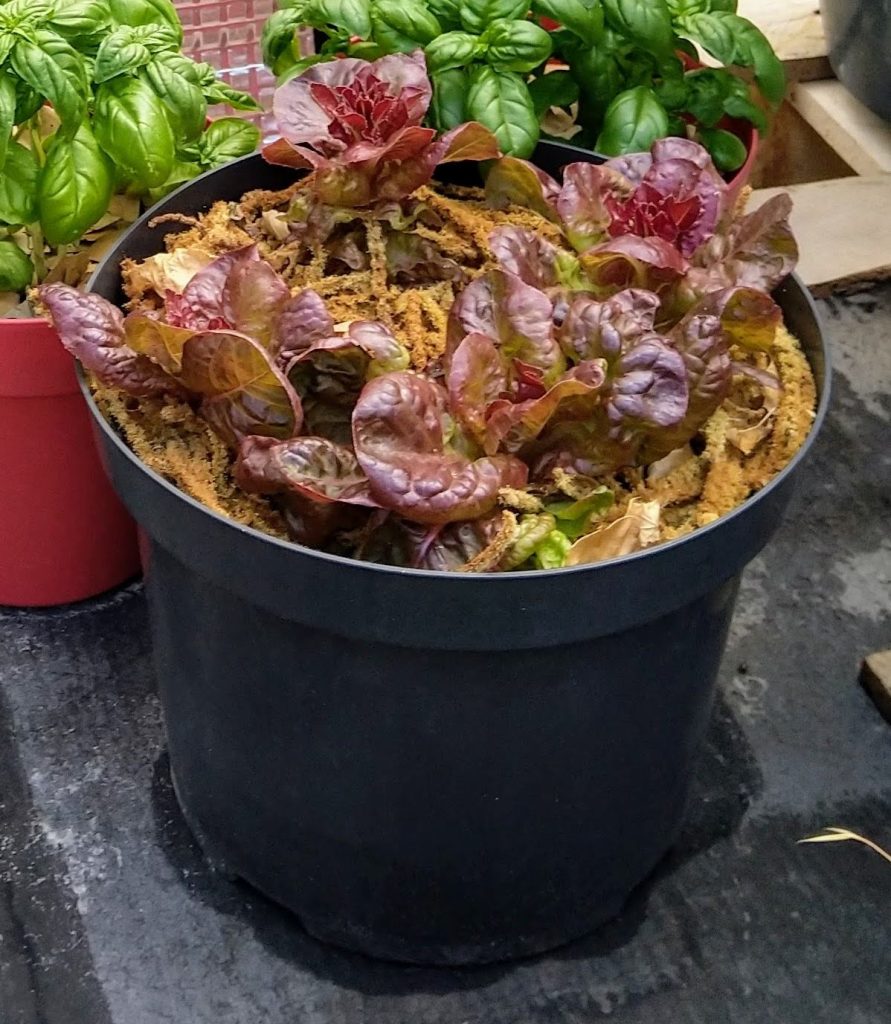
Deeper and wider rectangular containers are more adapted with more space which is better as the roots are better protected in the soil.
Plastic containers, especially the dark coloured ones placed under a hot sun during the heat of summer are going to absorb a lot of heat, which in turn will heat up the soil excessively.
Plants, on the whole, prefer their roots to remain on the cool side. High soil temperatures are likely to stress your plants, weakening them and making them vulnerable to diseases and predators.
To alleviate this problem, you can surround your plastic containers with a wooden frame which will do a better job of absorbing the heat instead. Or, you can move them to a shadier spot during the heat of summer.
Some plastic containers now have a double wall with air space in between. They also have self-watering systems in place so it’s worth a look.
Grow bags
I haven’t used grow bags or any other bags like the strong and sturdy ones used for shopping for one good reason, they are hard to move when full of wet soil.
Grow bags do have the advantage of what is called “air pruning” which helps prevent the root ball of the plant from becoming root-bound.
As I understand it, when the plant roots get to the edges of the fabric pot and sense the drier soil exposed to the air, the roots know they have reached the limit of their growth.
The root ends die off, which sends a signal back up that tells the plant to branch the remaining roots in all directions, like the branches of a tree.
This ends up creating a more complex and efficient root system. In a standard pot when the roots hit the edges, they start going around in circles, finally creating a dense clump of matted roots.
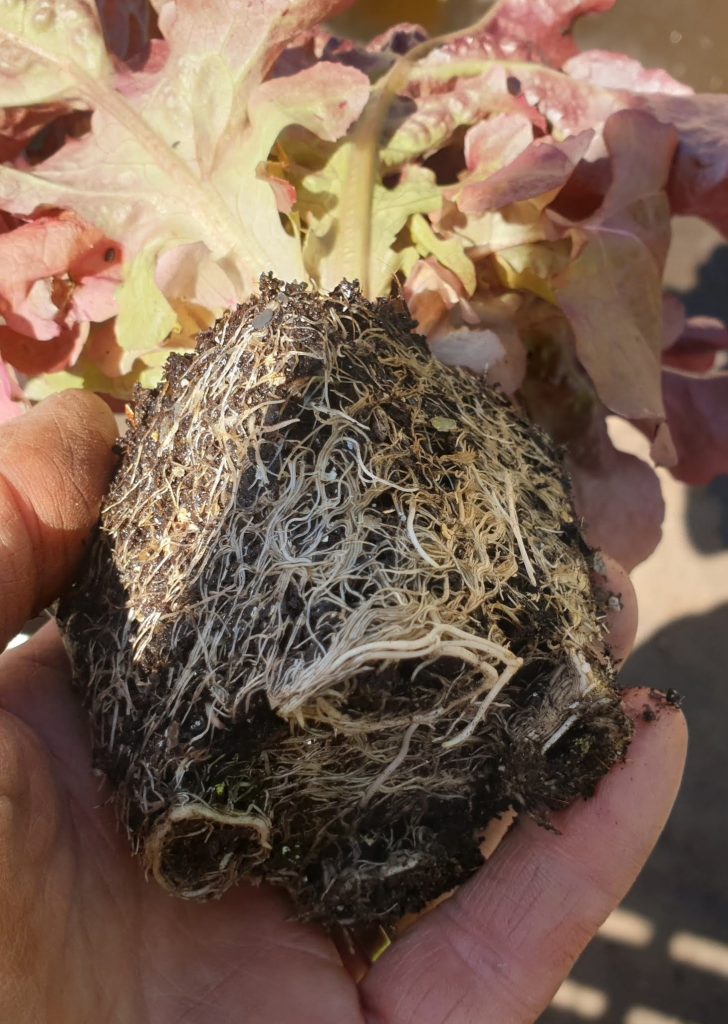
I am not sure if this is an advantage with plants with small root systems like leaf vegetables. A larger plant like a shrub or small fruit tree might benefit from this method.
Due to the breathable fabric, grow bags are less susceptible to extremes of temperature during a hot summer. Excess heat can easily escape from all sides of the bag.
You may need to water more frequently.
However, over-watering is not to be feared as any excess water will be able to escape more easily through the breathable fabric.
If you use a light enough soil mix, you might be able to move the bags around to a sunnier or shadier spot if necessary, with the help of built-in handles.
One thing you should know, plants don’t like being disturbed. The bag material, not being rigid but supple, the soil will move around the edges as you lift the bag and you will disturb the plant roots.
One big advantage of using grow bags is when they are no longer needed. You can just clean and fold them away.
Up next – What Soil Do You Use For Growing Plants In Containers?