


Strawberries make a fantastic addition to your vegetable container garden and they don’t take up too much space either.
As we all know, most store bought strawberries have almost no flavour and are among the most pesticide treated fruits in the world.
Growing your own strawberries makes so much sense and with a few simple steps, you can enjoy these delicious fruits all summer long until the beginning of autumn.
@rooftopveg Rooting Strawberries #rooftopveg #rooftopgardening #containergarden #vegetablegarden #organicvegetable #freeplant #strawberries #propagatingplants
♬ Planet – Sofiane Pamart
Propagating strawberries
One thing to remember is not to buy too many plants. Strawberries propagate themselves with stolons or runners. It’s very easy to lay the runners on some soil and new roots will quickly form from a node.
A node is a joint in the runner with some leaves and the beginnings of roots at the base.
Below is a runner attached to a node with some leaves and at the base, the beginnings of roots.


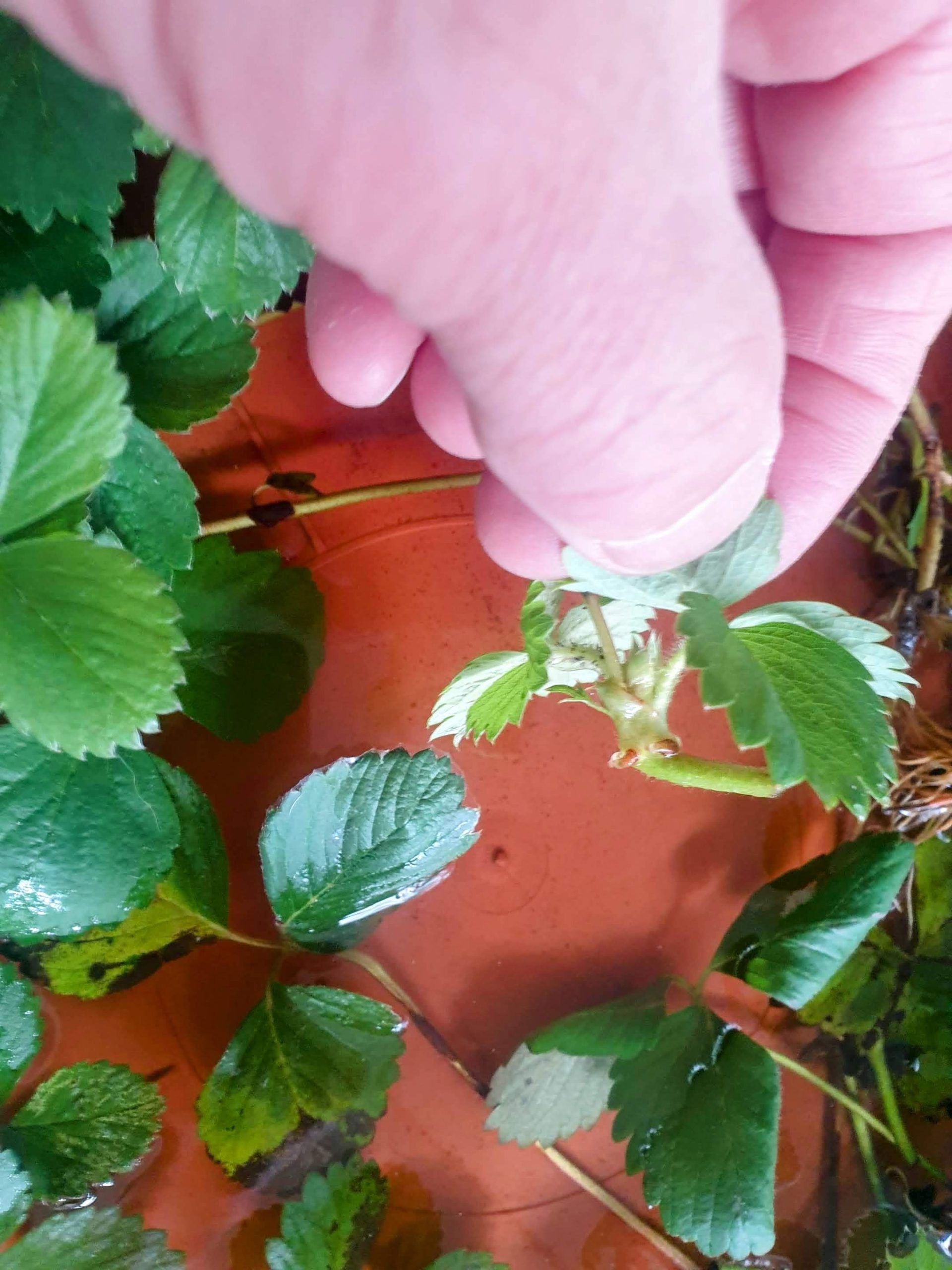

You can also start new plants off in water which is practical if you want to propagate from a friend’s plants.
Just put the nodes in some wet absorbent paper and put them in a plastic bag until you get home. Then place them in a shallow dish of water until roots form, about one week later.
@rooftopveg Are You Buying Strawberries Part 2 #organicgardening #rooftopveg #vegetablegarden #strawberries #legumesurletoit #propagatingplants #propagatingstrawberries #containergarden
♬ Seeker – Hiromi
So instead of buying a lot of plants which are unnecessary, buy different varieties instead. That way you can see which ones grow better where you live and more importantly, which ones taste better!
Planting strawberries
It’s best to plant strawberries either in autumn or in early spring. That way the plants have time to settle in before the hotter temperatures of summer arrive.
Flowers equal fruit but it’s important to remove any flowers appearing during the first growing season. If flowers are allowed to grow into berries, their development will reduce plant growth and the size of the following year’s crop.
Personally, I did not follow this golden rule and I still got quite a few berries to enjoy.
Strawberry plants should be spaced 30 cm apart and don’t be fooled by their small size when you buy them, they will fill up any available space very quickly.
Use the best possible potting soil and if you have your own homemade compost add that too. You want to get your plants off to a good start.
Strawberries grow vigorously so they need enough space to develop properly. Use a pot or a container as deep as possible. The roots might not use all the vertical space but they will be better able to take up water from down below during dry spells.
In the summer you’ll probably find your plants growing stolons or runners as I mentioned previously. Unless you want to propagate new plants, it’s better to snip them off and get the plants to concentrate on growing or flowering and making fruit.
To save on watering, it’s better to use a mulch which holds in humidity and stops the sun from drying out the soil. Mulch is also better for the berries instead of them lying on the soil where they will be more prone to insect damage.
Winter protection
During winter, especially if your winters are hard and prolonged with freezing temperatures, you will want to place your container strawberries somewhere where they will get some protection.
You can place them next to your house walls or in an unheated but sunlit room. Strawberries will still continue to grow and so will need sunlight.
If you can’t move your strawberries then you can protect them with fleece, it’s the same technique I use for my lettuce.
Just before spring arrives and new growth begins, you will want to clean up your plants. Remove any dead, dying or damaged leaves and stems.
You might find that the level of potting soil in the containers has gone down.
Compost has a tendency to become more compact and from when you first filled your containers when it was light and fluffy.
Watering also slowly washes away compost particles through the drainage holes.
Before the new growing season begins in spring, scrape away old compost from the surface replacing it with a fresh layer without completely submerging the crown of the plants.
Water thoroughly and add a thick layer of mulch of dried leaves which will hold in the humidity.