

Does lettuce grow in winter?
Lettuce can grow in winter and if weather conditions are favourable where you live, you’ll have well established plants raring to grow as soon as the days start getting longer again and light levels increase towards spring.
Container gardens are usually situated close to a house or on a balcony. A container garden in central Europe and northern Canada will face different weather conditions but both should benefit from the warmth and protection afforded by surrounding buildings.

Living in an urban environment near a major European city, my container garden is situated on my garage rooftop. Placed close to the house, the escaping heat from my house provides an extra degree or two of warmth which can make a big difference between freezing or not. These plants also benefit from additional reflected sunlight off the house wall.
Sowing and Planting 🌱
Just like there are varieties of lettuce that grow better in hot summer conditions, there are also varieties that are well suited to the cold and the low light conditions of autumn and winter.
My favourites are Winter Density and 4 Seasons. There is also lamb’s lettuce which is lots of small individual plants growing densely together.
Winter Density is a hardy and older romaine variety of lettuce that is easy to grow with stiff upright leaves. It makes a hearty and crunchy addition to my salads.
If you’re sowing seeds, you should aim to start sowing from the middle to the end of summer (mid July and August) or plant outside in early September. This will give your lettuce sufficient time to establish itself. put on some good growth and allow you plenty of leaf picking before winter.
Because when the colder weather arrives, growth will slow down considerably. The priority then is to take the best care of your plants so they’ll survive until the beginning of spring.
Protection ☔
Unprotected, lettuce can tolerate freezing temperatures for short periods like overnight frost without damage, as long as the temperature warms up during the day.
If you have continuous freezing temperatures day and night with the addition of biting cold winds, your lettuce might end up looking sad and sorry if you don’t protect it somehow.
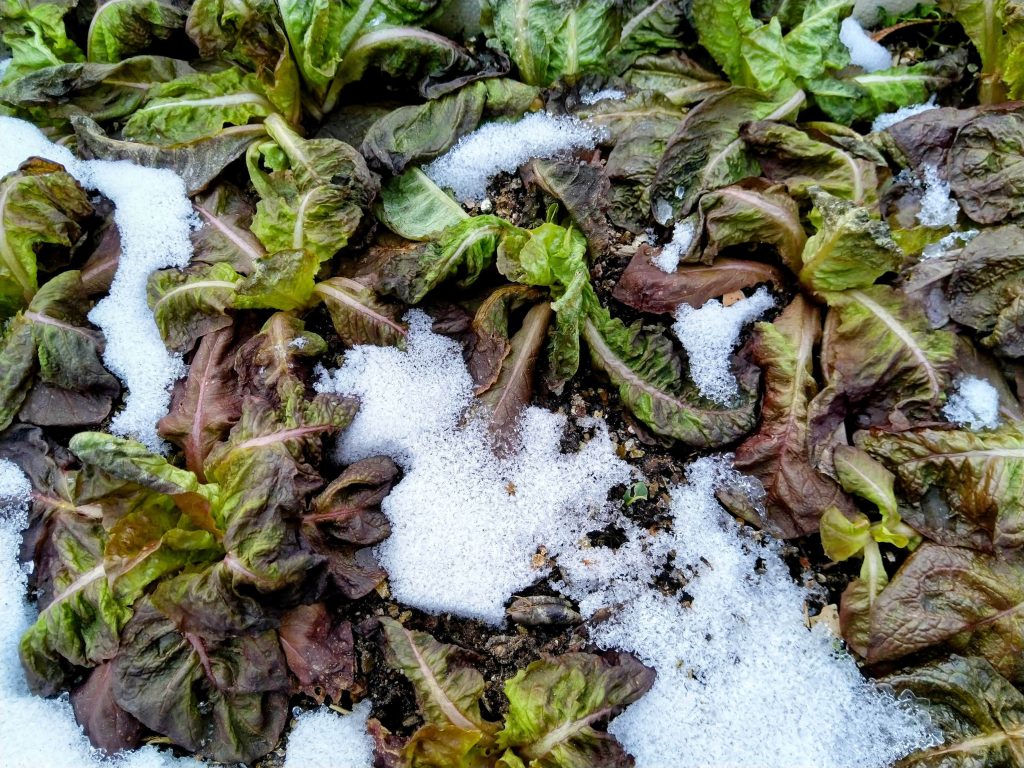
Extreme cold causes water in the cells of leaves to freeze, bursting the cells and damaging the leaves beyond repair.
These plants look awful but they did not die. They grew new leaves again from the root base and gave me sumptuous harvests later on.
I use horticultural fleece to protect my plants which has several advantages compared to plastic. Fleece is a synthetic fibre like the ones used in pullovers and jackets to keep us warm. It’s soft and light and is traditionally used to protect shrubs that are sensitive to the cold.
Fleece prevents the leaves from freezing, allows sunlight to pass through and unlike plastic is permeable to air and moisture.

To ensure maximum protection, you can lay several layers of fleece over your plants, it won’t damage them and they’ll just push up the material as they grow.
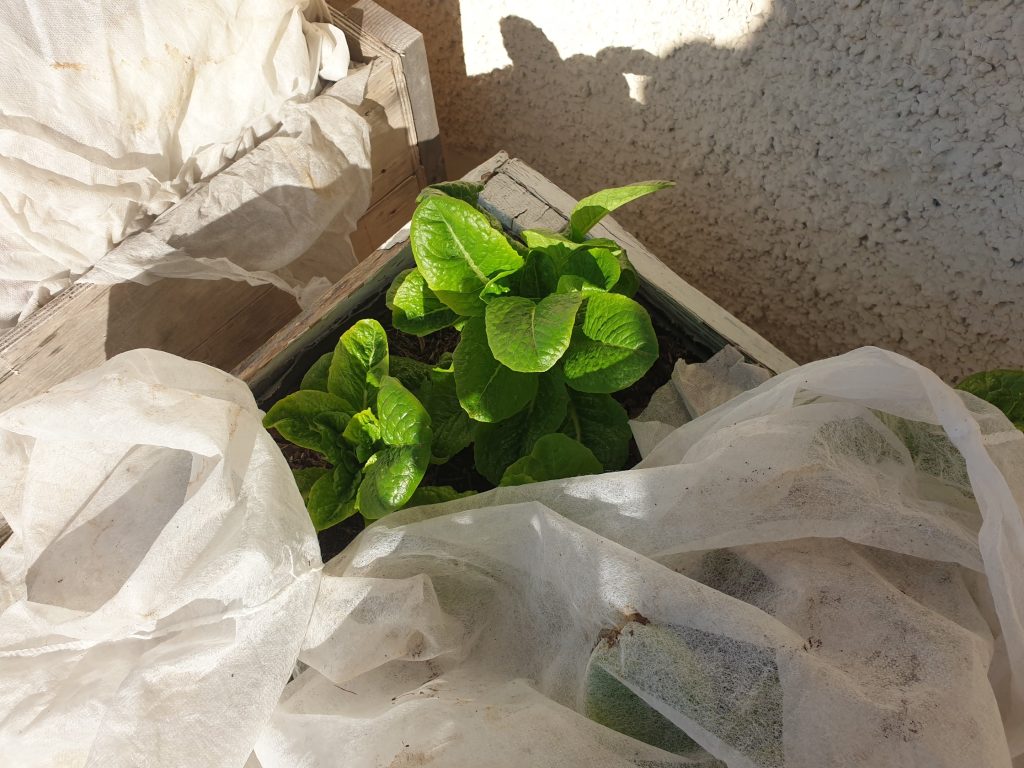
You can leave on the fleece as long as temperatures are below freezing without worrying about whether your plants are getting enough sunlight or water when it rains.
There are different weights per square metre and 30 grams is a good choice for protecting your plants. Fleece can easily be cut with scissors and will last a long time unless it gets torn which is easy to do.
If you haven’t done it already, you should apply mulch around your plants with all those dead leaves that have just fallen in the autumn.
A thick layer of dead leaves will provide insulation for the soil and plant roots and slow down the effects of the cold.
Lettuce requires regular watering even in the colder months of autumn and winter and if you are mulching sufficiently, you can water less. Just poke your finger fully into the soil and feel with the tip if the soil is moist down below.
Conclusion 🤔
I’m going to be honest with you here, in winter, your lettuce plants will grow very slowly if at all.
It’s time to swallow your pride and temporarily abandon your dreams of leaf-picking self-sufficiency.
Your plants, well protected under layers of fleece and mulch, you can return to buying salad at the grocery store confident in the knowledge that better days are waiting just around the corner!
Up next – Bonus 1 – My Indispensable Herbs