

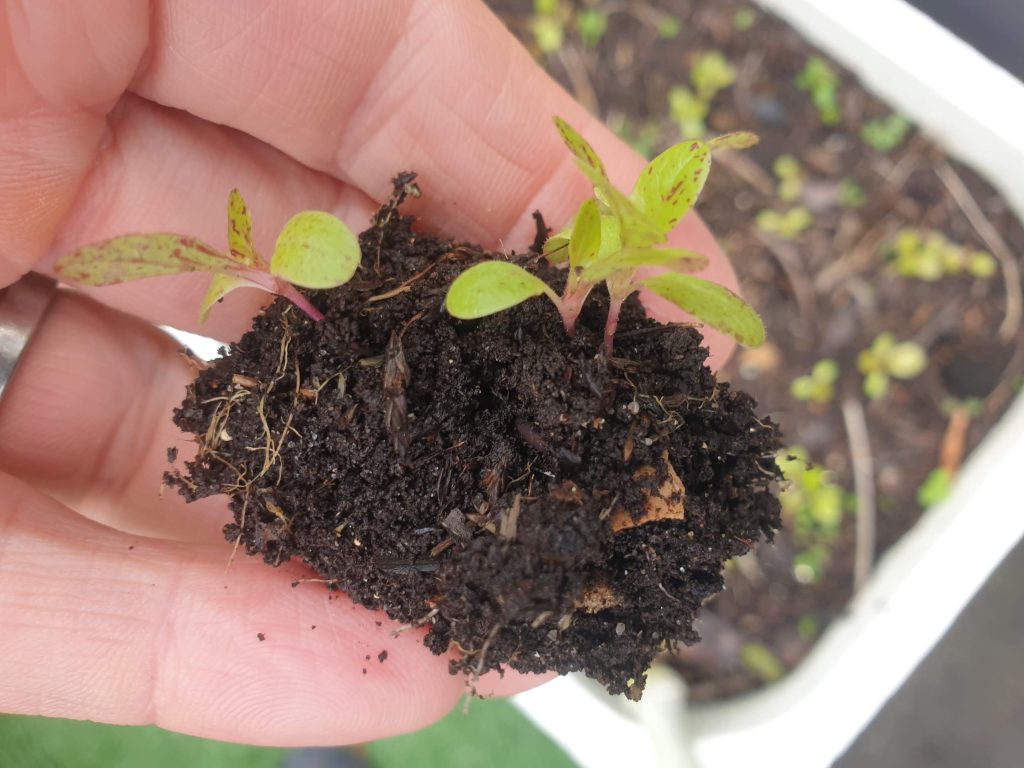
Caring for your plants is important if you hope to enjoy fresh leaves for your salads.
What you’ll learn 🧑🎓
All about watering and all about mulch 💦
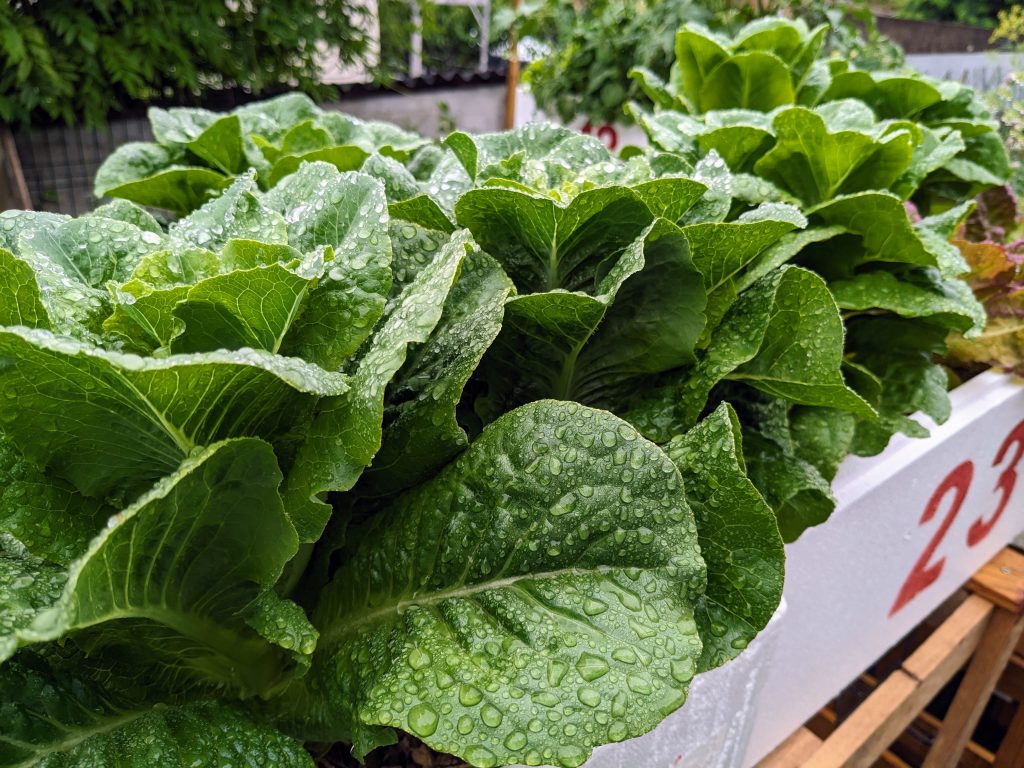
Lettuce thrives in cool wet weather and those deep green leaves will never look more appetising than in early spring or autumn before or after the heat of summer.
And contrary to what you might think, the high temperatures of summer are not what many plants prefer.
At whatever time of the year you started your salad garden, in spring, summer, autumn or even winter, there are two essential things you can do to take the best care for your lettuce plants.
The first and obvious one is watering because as we know all plants require water and the second, is the technique of mulching.
In your container garden, these two techniques go hand in hand and doing the second means you can do less of the first!
In very hot weather or dry conditions over 25°C, lettuce may require watering every day preferably in the morning but the frequency of watering can be reduced using mulch.
If your plant leaves are wilting, it is likely to be a sign of lack of water. In hot weather, wilting occurs because the plant is unable to move enough water from the soil to the leaves as quickly as it is transpired.
Watering your young plants 🚰
@rooftopveg How to tell if your plants need water #WateringPlants
♬ Outa-Space – Billy Preston
There is a simple way to test the dryness of your soil and that is with your finger. Using your index or middle finger, poke it all the way into the soil. If it feels cool and humid at the bottom, hold off watering for another day. Otherwise go ahead and water.
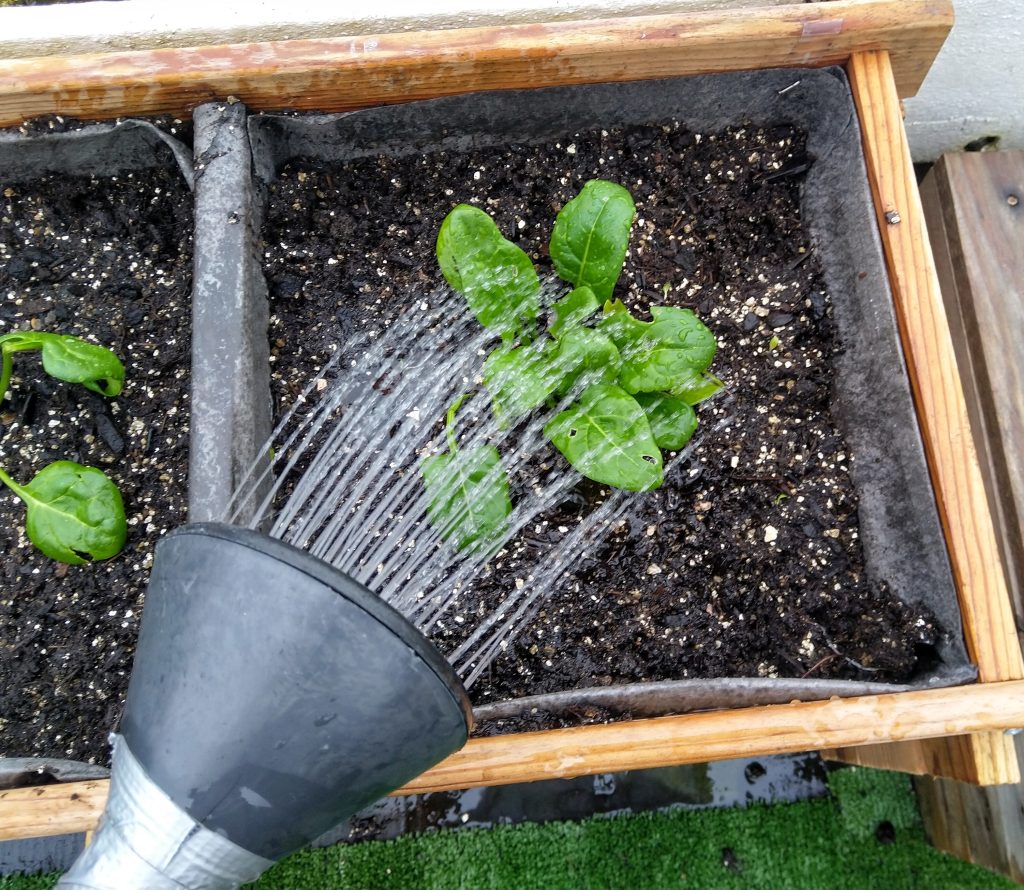
Here are 9 top tips for better watering
- Water in the evening or in the morning when the soil is cooler and the water won’t just evaporate. If you have problems with slugs choose the morning as slugs are awakened by humid conditions at night.
- Heavy soil retains humidity more and needs less watering than light well draining soil which dries out quicker. Organic mulches such as a thick layer of dead leaves can help moderate soil temperature as can using foam boxes for insulation.
- Water your containers slowly in the middle section so that the water can be absorbed without running away over the surface or down the inside of your containers. Repeat if necessary
- If plants are not showing signs of water distress like wilting leaves, let them thirst between watering so that their roots have to grow down deeper to find humidity. Watering frequently encourages roots to grow near the surface and make the plant vulnerable in case there is a dry spell or you forget to water.
- If the soil surface in your containers is hard and compacted, break up the surface with a hoe or trowel. Water will be able to better penetrate to the roots. There is a saying “a good hoeing is worth two waterings’”.
- One word of warning! Lettuce has shallow roots so the area around the plant should be hoed carefully to avoid damage.
- Get rid of weeds which compete with your plants for water.
- To avoid evaporation of water, mulch your soil with grass clippings, dead leaves, shredded paper, or cardboard. Mulching will protect your soil from sunlight (which heats the soil) and will help retain the humidity underneath. It will also stop the development of weeds. If you use grass clippings, make a thin layer less than 5 cm thick.
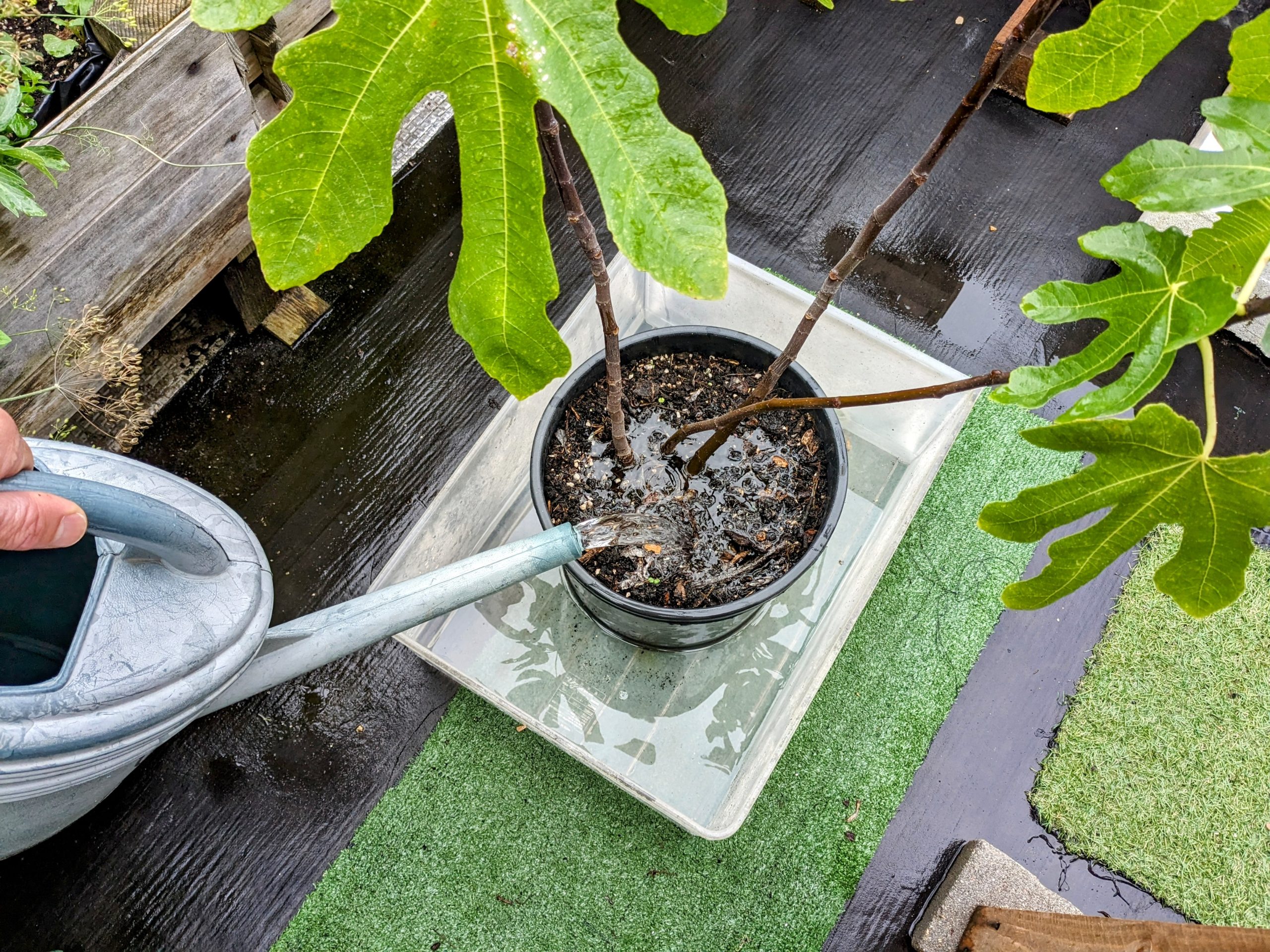 If you have small pots, put them in a large container filled with water (like this fig tree) and water your plants from the top as you normally would. The water descending, will meet the water wicking up from the bottom and your plants will be thoroughly hydrated. I often leave my pots in the water for several hours if necessary.
Mulching your plants 🍂
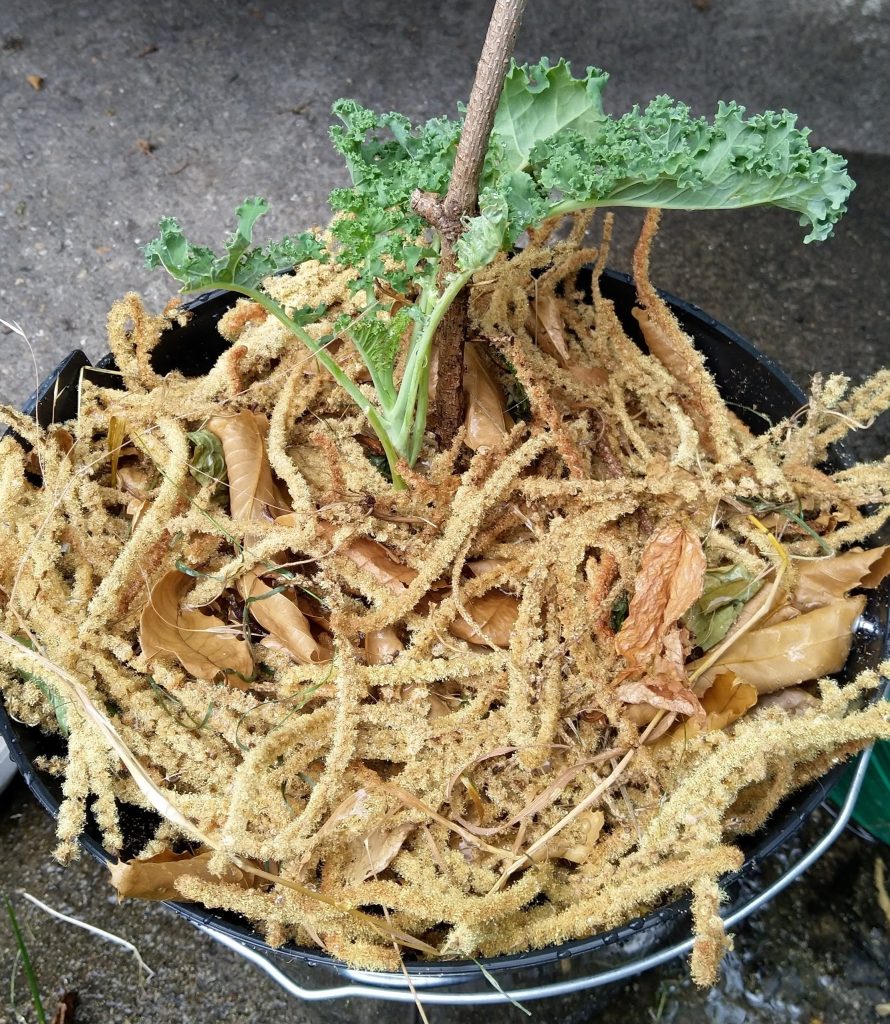
5 reasons why you should use mulch in your garden
- Mulch promotes beneficial microbe and fungal growth
- Mulch insulates the soil from extremes of heat and cold.
- Mulch keeps down weeds and any weeds that do appear are easier to remove.
- Mulch acts as a protective barrier
- Mulching slowly nourishes the soil (except mineral mulches like pebbles)
What is mulch?
Mulch is material, organic or mineral that you spread over the soil to protect it and to slow down water evaporation and help maintain an even soil temperature.
Mulch keeps your plants snug and warm especially during the winter.
Straw, hay, grass clippings, shredded paper from the office, cardboard or pebbles can all be used as mulch but the best material of all are dead and dried leaves.
Where do I get leaf mulch?
Autumn is the best time for collecting dead leaves and you could collect leaves on the pavement but they might be contaminated with oil or polluted with litter and plastics or worse.
Avoid collecting leaves in a forest because fallen leaves serve as wildlife habitats and you might disturb some creature, making it vulnerable to the onset of winter.
The best way is to ask people in your neighbourhood that have trees saying you will collect their leaves for free and take them away. I’ve done this and people are more than happy to oblige.
Dried leaves are easier to collect than wet leaves but dried leaves will also take up more space in bags. You really need to compress the leaves as much as possible when you’re filling your bags by pressing down and pushing out the air.
If you can only get wet leaves because it’s raining, you’ll need to dry out the leaves another time. If you don’t dry the leaves, they will start decomposing into compost
How many leaves you collect will depend on how much space you want to mulch but I would say two 50 litre bags of compressed dried leaves should see you through until the next autumn.
If you’ve got a yard then you probably own a lawnmower. Use it to shred the leaves into smaller pieces because shredded leaves take up less space and they are easier to use. If you don’t have a mower or access to one don’t worry, you can cut the leaves with scissors. It’ll be time-consuming but worth it!
Organic mulches like leaves especially when they have been shredded, have the advantage of slowing nourishing the soil providing food for soil organisms but unlike mineral mulches like pebbles, they need frequent replacing.
Under a thick layer of mulch, micro-organisms, fungi and various insects are all insulated and protected in a humid environment from extremes of heat and cold allowing them to eat, live, excrete and die all the while enriching the soil with their activity.
An alternative to collecting leaves or other material is to use the plant waste already in your container garden like damaged or dying leaves not suitable for eating.
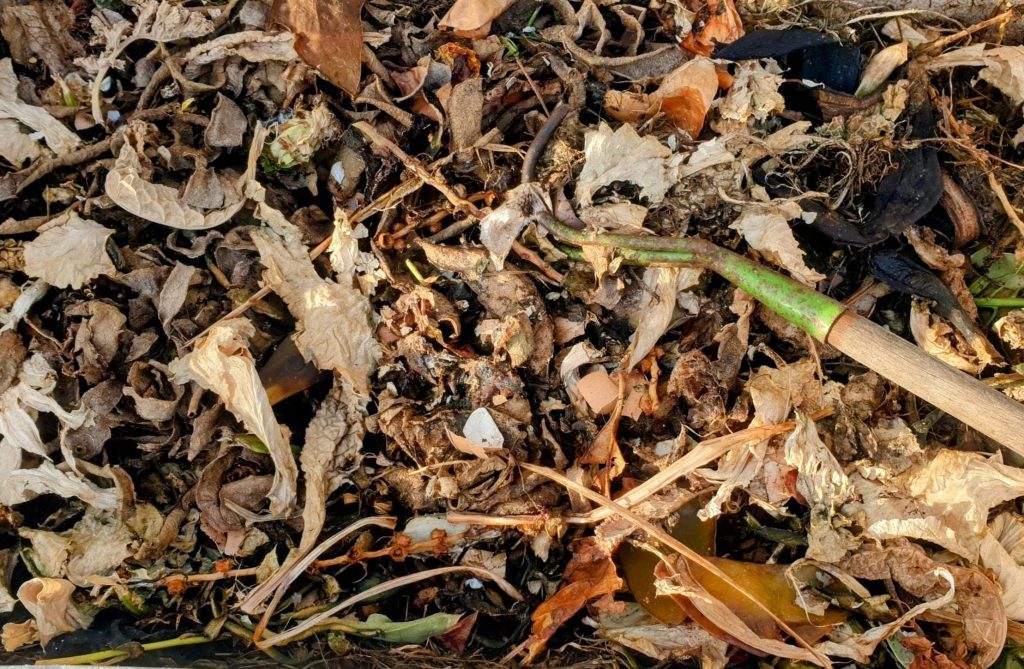
This is the technique called “chop and drop” which is the practice of chopping or cutting up dead and dying plant material into small pieces and spreading it over the soil surface.
You can build up layers of this material which will protect the soil surface and the creatures that live there whilst slowing the drying out process.
Once decomposed, this material will feed the next generation of plants. This is the natural process of nature where plants, trees, branches and leaves fall to the ground and decompose forming humus.
Up next – Fertility and Fertilisers