

You have 2 choices and either way, you can’t go wrong!
Buying plants or sowing seeds, which is better? If this is your first time gardening, my advice to you is start with buying some lettuce plants that are already growing well.
What you’ll learn 🧑🎓
3 great reasons to buy plants:

- Save time. These 6 week old lettuce plants are just the right size to plant out and they’ll grow fast. Do you want to wait all that time before having fun?
- You get immediate satisfaction with a newly planted salad and herb garden.
- Harvest time comes sooner. Starting out with bigger plants means you can begin picking leaves almost immediately.
Salad Addicts guide to growing perfect lettuce from seeds.
Advice on buying plants 🙂
When buying plants, choosing strong healthy seedlings is a key element to avoid wasting time and money.
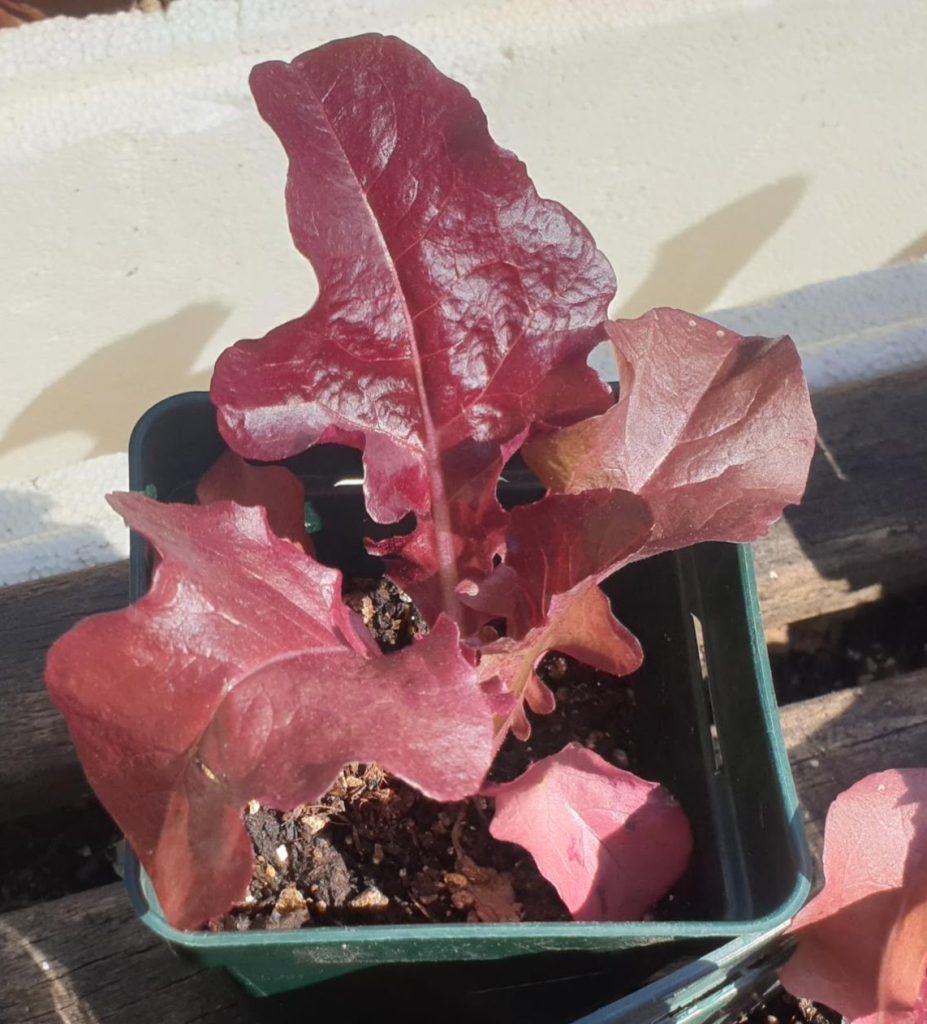
Healthy young lettuce plants are bright red or green and have strong upright leaves with no marks. Avoid plants that are wilting or look in poor health.

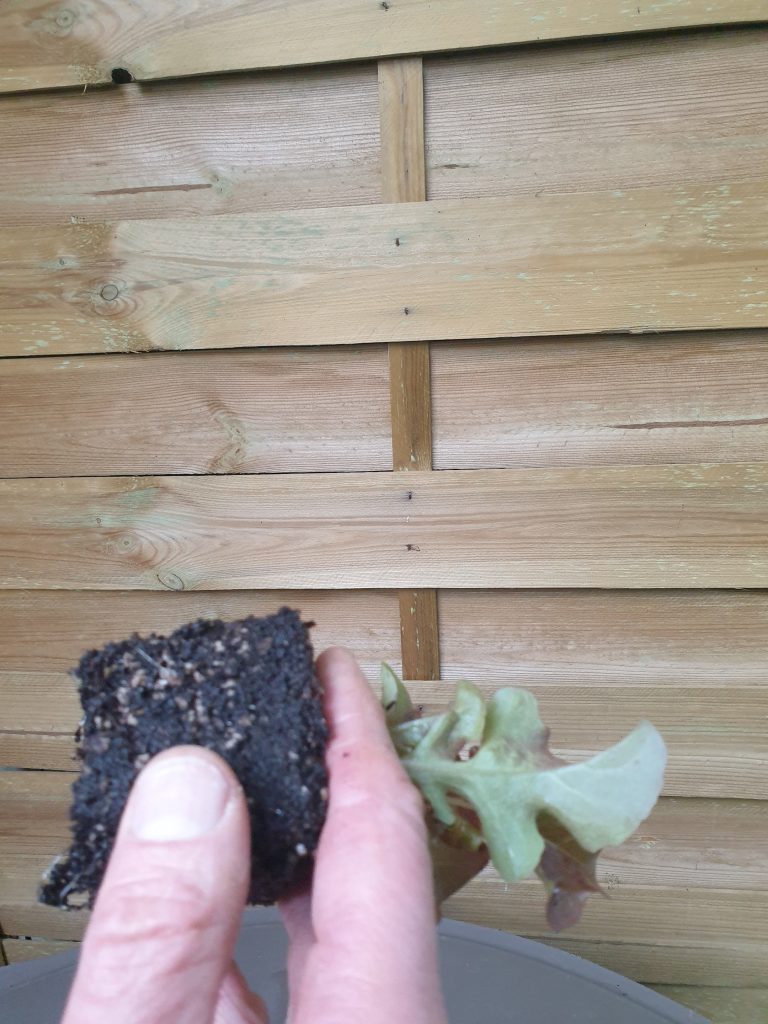
If you can turn the plants upside down to remove them from the pot, you should be able to see a good network of fine white roots; -photo below left.
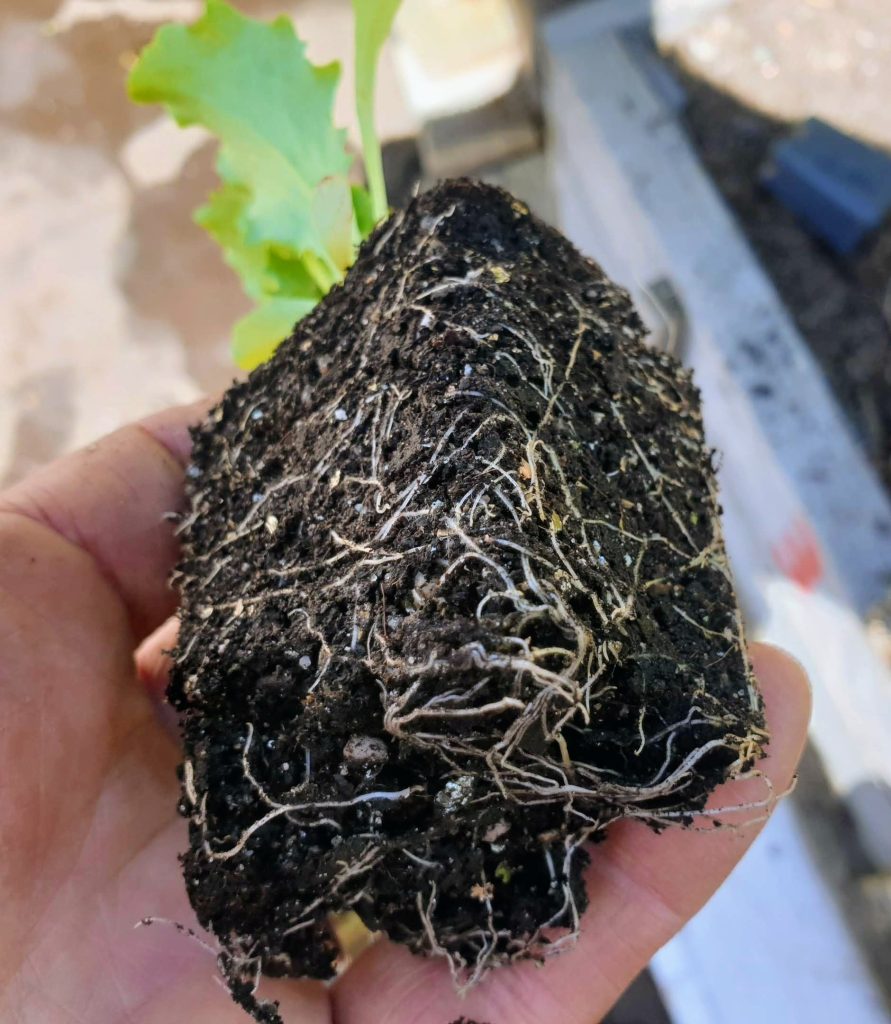

In the photo on the right, the roots are already thickening and going around in circles at the bottom. This means that the plant is root-bound, it’s spent too much time in the pot.
Avoid these plants if you can but if that’s all you have available, there’s a solution.
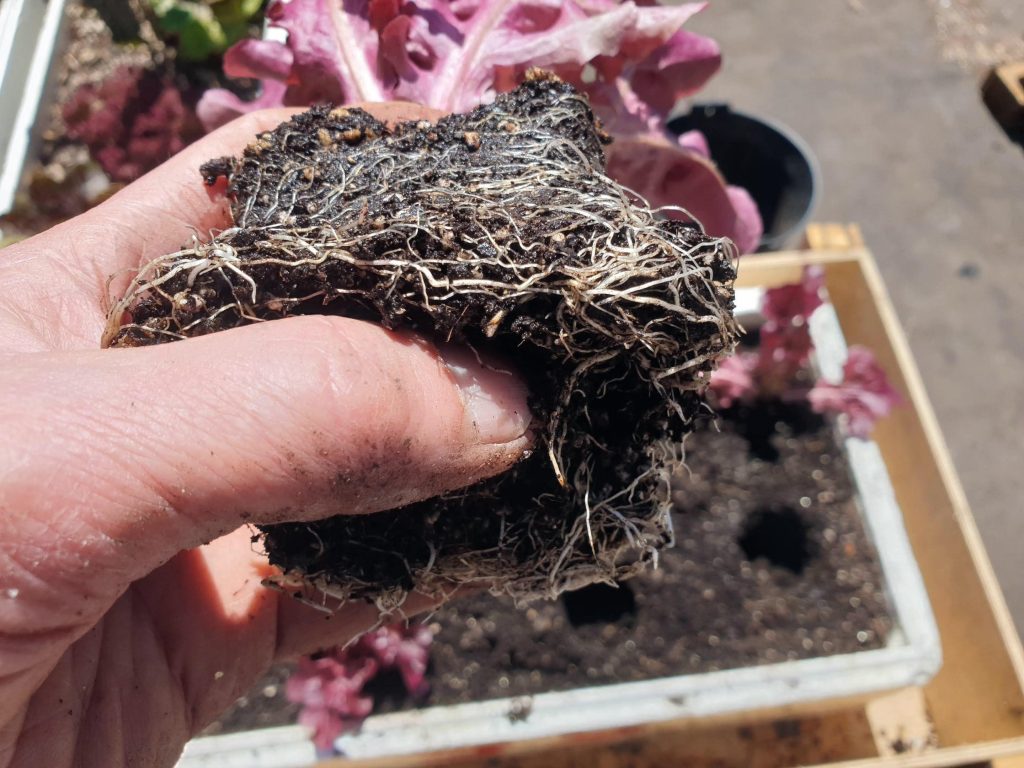
Gently loosen up the roots at the bottom and spread them out before planting.
This will encourage the roots to grow outwards.
One word of warning, don’t buy seedling plants and immediately plant them outdoors, you need to harden or acclimatise them first.
Important tips ✔
When you buy your plants, be sure to select at least 3 different varieties for the following reasons:
- Some varieties will probably grow better than others according to your soil or your micro climate.
- Some varieties might be more susceptible to a disease or parasite. If you only have one variety, all your plants could be affected.
- A bowl of salad is much more appetising with a mix of different coloured and textured leaves.
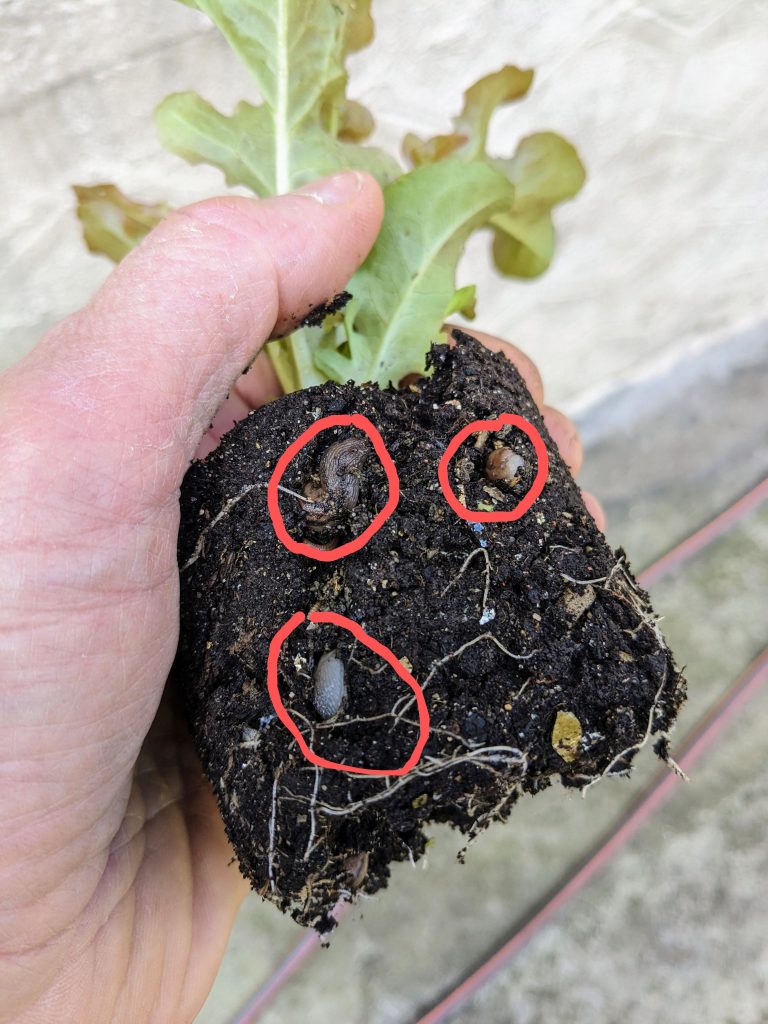
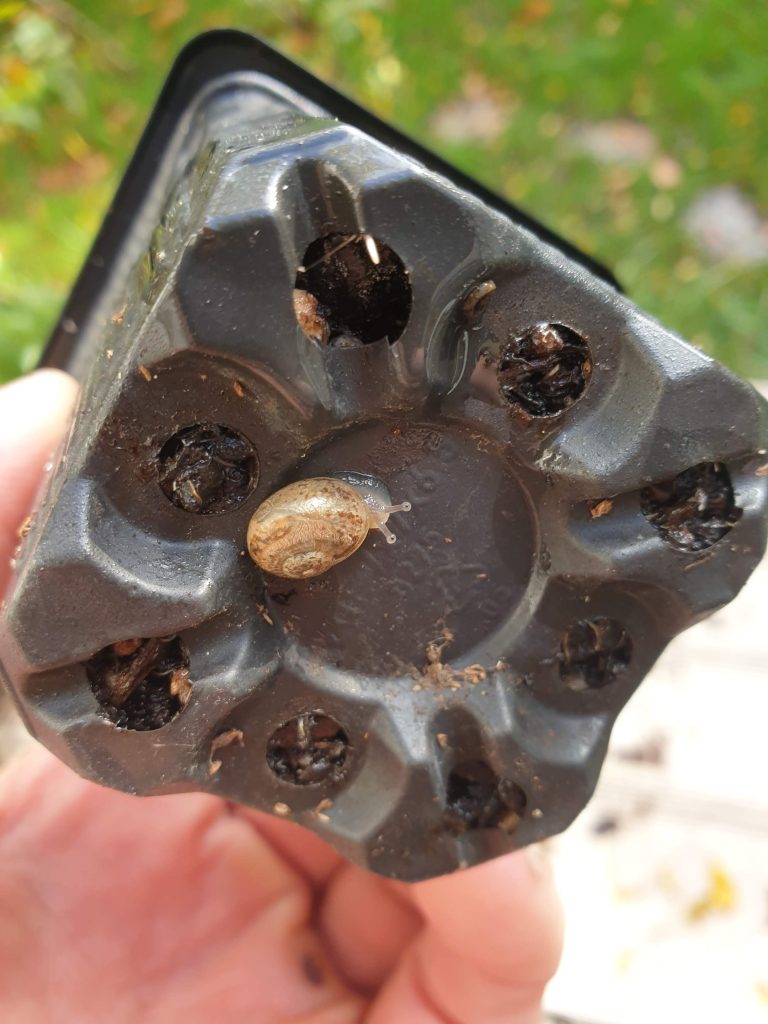
Be sure to look inside and underneath the pot for any slugs or snails that may be hiding before bringing home your plants. Once they’re in your garden, slugs especially, are hard to eliminate.
Planting outdoors ⛈
Hardening off
You’ve bought plants from the garden centre but before planting them outside you need to do something first.
Nursery plants have been living a sheltered life. They have been :
- Cared for expertly 🧑🌾
- Watered regularly 🕑
- Temperature conditions just right 🌡
- Protected and safe in a glasshouse ☔
- Not a nuisance insect or a predator in sight 🐛
- They can’t help but look their best so you’ll buy them! 😍
Suddenly exposing those plants to:
- Intense sun and heat 🔥
- Big temperature changes between night and day ❄🌛 🌞
- Strong winds and heavy rain 🌦
- Irregular watering 💧
These will be a source of stress, which can weaken your plants making them more susceptible to predators, pests nuisance creatures and diseases.
What you need to do is acclimatise them to the outside first while providing them protection. In gardening jargon it’s called “hardening off.”
Hardening off is a process of adaptation. Gradually exposing your plants to ever increasing amounts of more intense sunlight, temperature fluctuations, wind and rain before planting them outside to fend for themselves.
This occurs naturally when plants grow from seed outside but not all plants succeed.
When we are trying to grow strong and healthy plants we don’t want to waste time, energy and money in seeing our young plants wither and die.
I have a small plastic greenhouse on my rooftop garden to keep my plants in overnight. Every morning my young plants go outside to have their daily dose of morning sun, wind or rain.
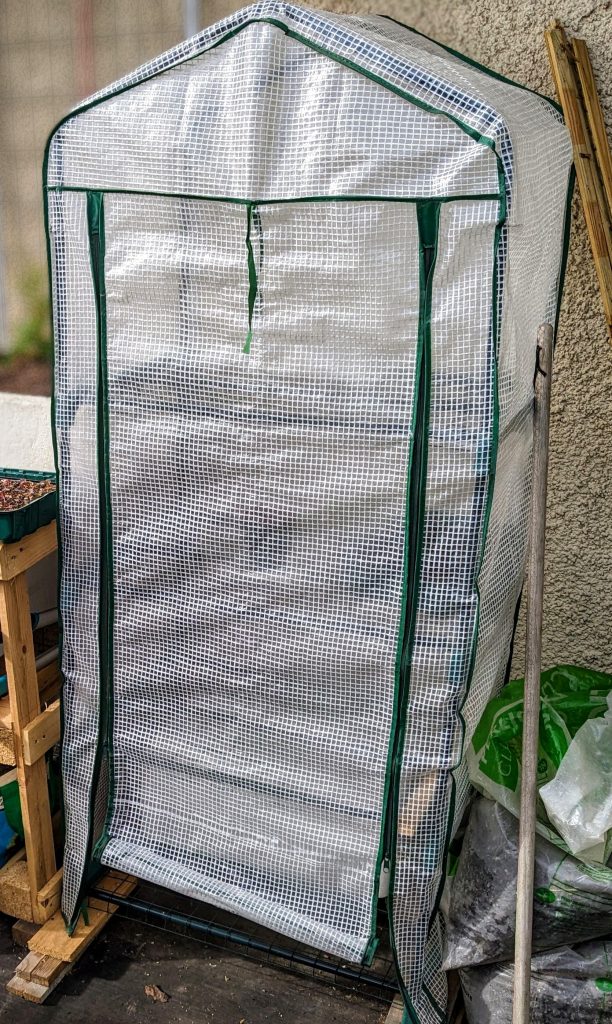
You don’t have to get a greenhouse like this to protect your plants, you could just put them in a fish box and cover with a lid or with fleece at night if the temperature dips below 10°c like in early spring.
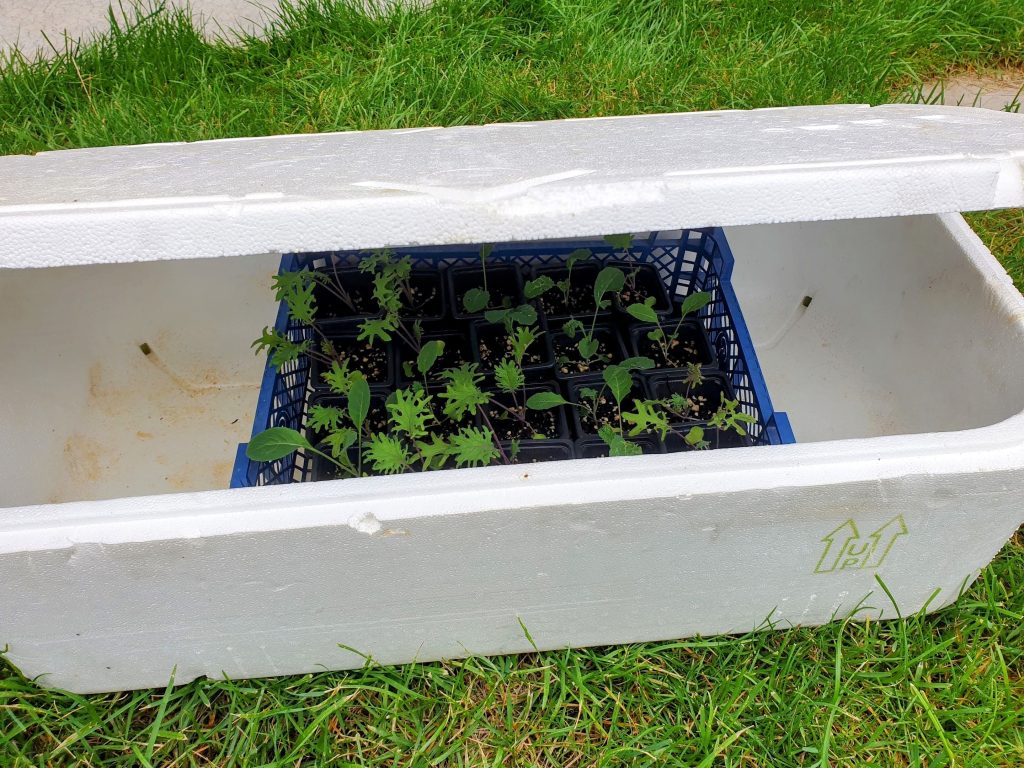
Place your plants preferably outside with a partial morning sun exposition to begin with. After a few days, move them to full sun if you can.
Bring your plants indoors if conditions are harsh like intense afternoon sun, heavy rain, snow or hailstones.
Keep the soil moist but not soggy. Better underwater than the over water and in any case, your plants will let you know if they are thirsty by wilting leaves.
After about one week, it’s time to plant them out in your container garden.
How to plant Lettuce🥬
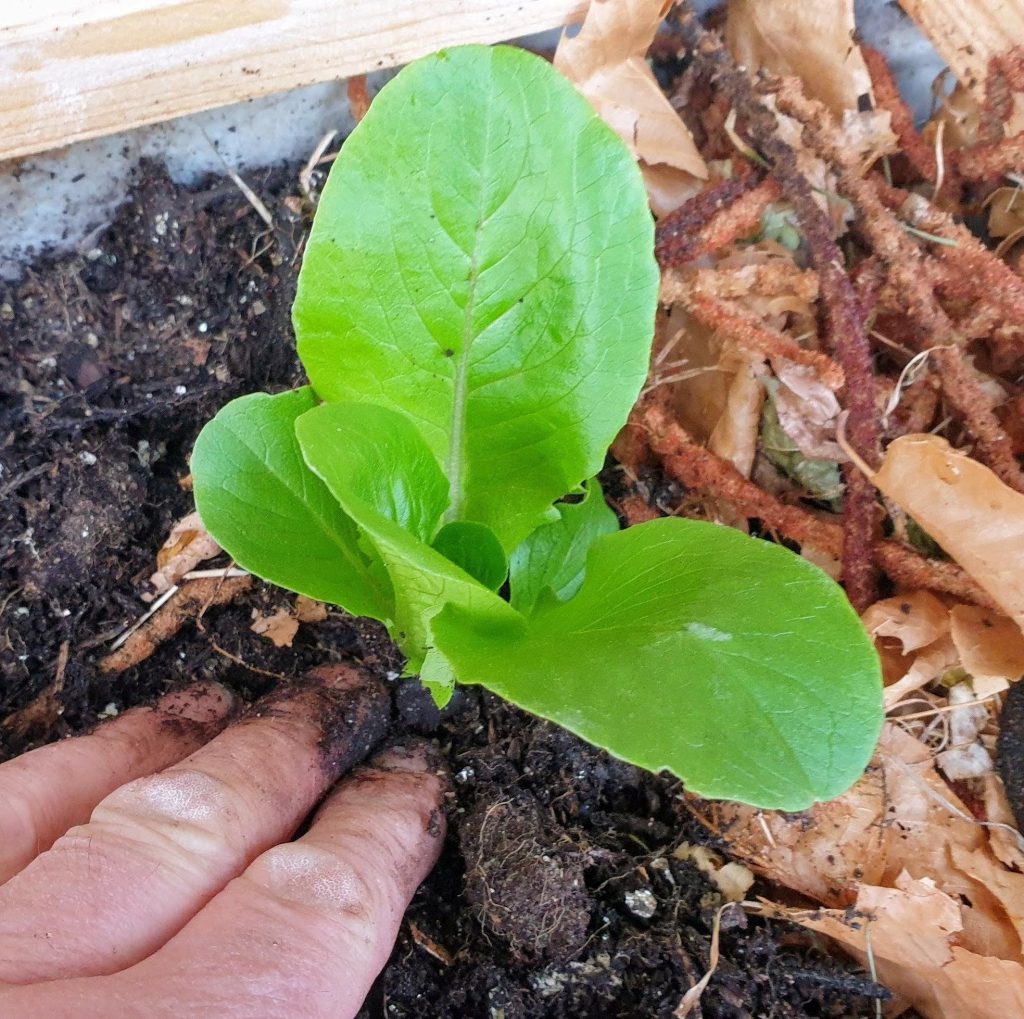
- Choose a cloudy day or plant in the evening. That way plants can settle in easier. On a sunny day, the plant leaves will be subject to heat stress and you will see this with the leaves wilting. This is a common occurrence and If this happens, the plant should recover in the cool of the evening.
- Before starting, water your plants a few hours before. This will help the soil stick to the roots when you remove the plant from the pot.
- Soil around the plant roots is very important and will help the plant recover faster after the stress of being moved to a new environment.
- Take a trowel and make a hole slightly larger than the pot.
- If the soil in the container is dry, add some water to the planting hole and let it drain away before dropping in the plant.
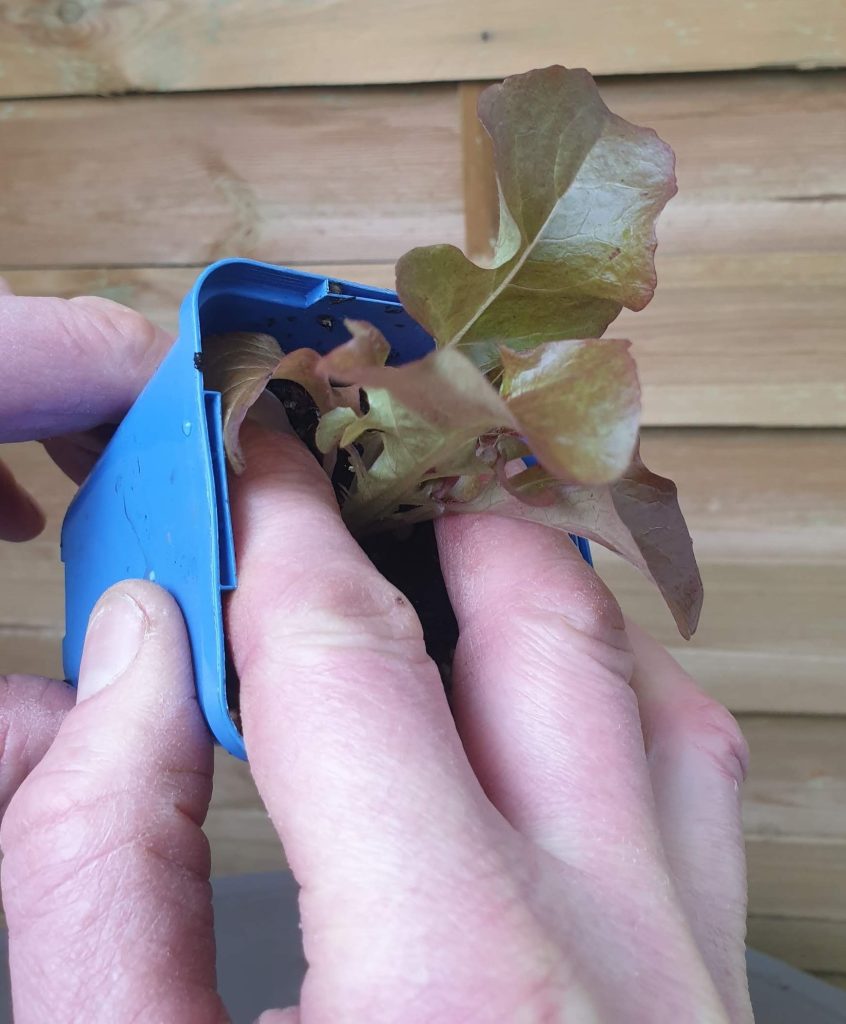
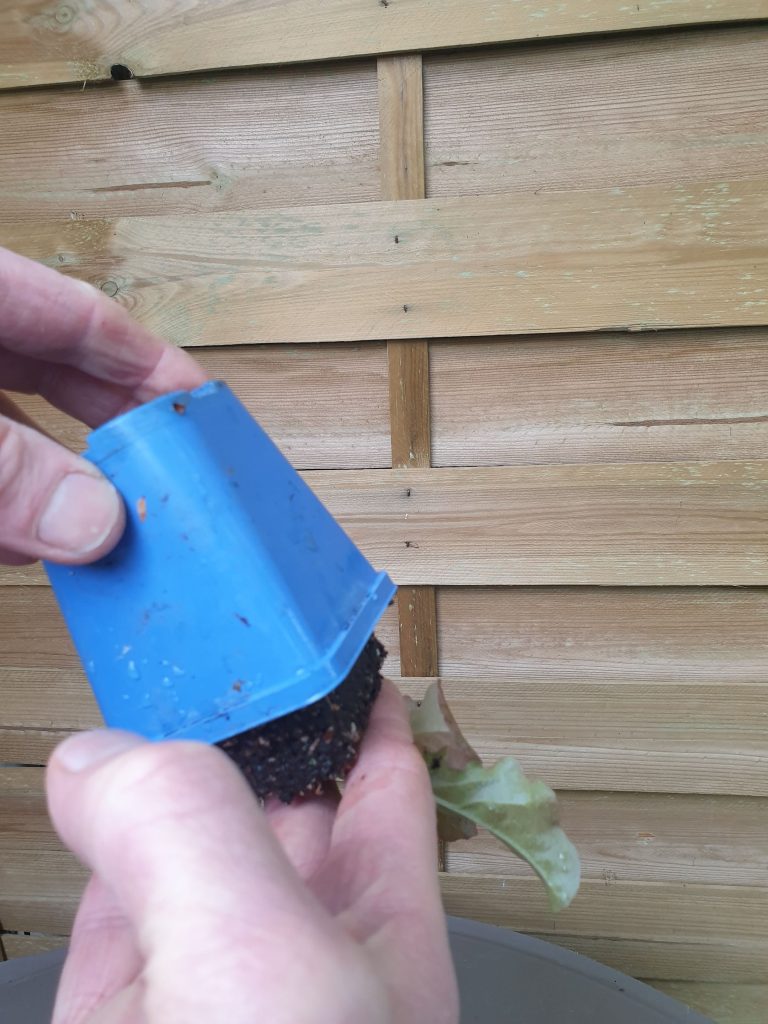
- Take the pot in one hand and with the other hand cover the top of the pot with your fingers. Turn the pot upside down and the root-ball should fall out. If it doesn’t, just squeeze the pot a few times. If you’re dealing with a clay pot, take a pointed object and push it through the hole in the bottom and the root ball should fall out.
- Holding the root-ball, place each plant firmly in its hole so that the top of its root system is just covered with soil. This will ensure a stronger stem and sturdier plant.
- Be careful not to submerge the centre crown with soil where the new buds form.
- Gently firm the soil around the stem so that the plant is firmly planted.
- Make a small depression around the stem so that water collects and goes down to the roots instead of “running” away over the surface.
- Water the soil thoroughly around the plant.
- If you’re planting under a hot sun, bring your container into some shade until the following morning otherwise you might see your plants wilting.
Avoid transplant shock
Plants grown artificially in small pots instead of in their natural environment in the ground are vulnerable to transplant shock.
Imagine suddenly being beamed from a warm and cosy apartment to a draughty country farmhouse? You might end up loving it but at first you’d be stressed until you settle in and make yourself at home.
Plants are the same. In a new environment, they need to be taken care of until they settle in their roots and orientate their leaves to capture sunlight. They might not grow for a week or two.
Container Dimensions and Plant Spacing 📏
Growing lettuce, you should always plant lettuce plants together in one large container rather than separately in individual pots.
Individual plants in pots will dry out faster and the soil in small pots will be subject to more temperature fluctuations than several plants in one large container.
The minimum useful size container is 55 x 34 like the box below.
From left to right; 6 lettuce and in the middle section, 2 dill herb plants.
At the beginning, the plants look like they have too much space between them but 2 weeks later, you can see the difference.
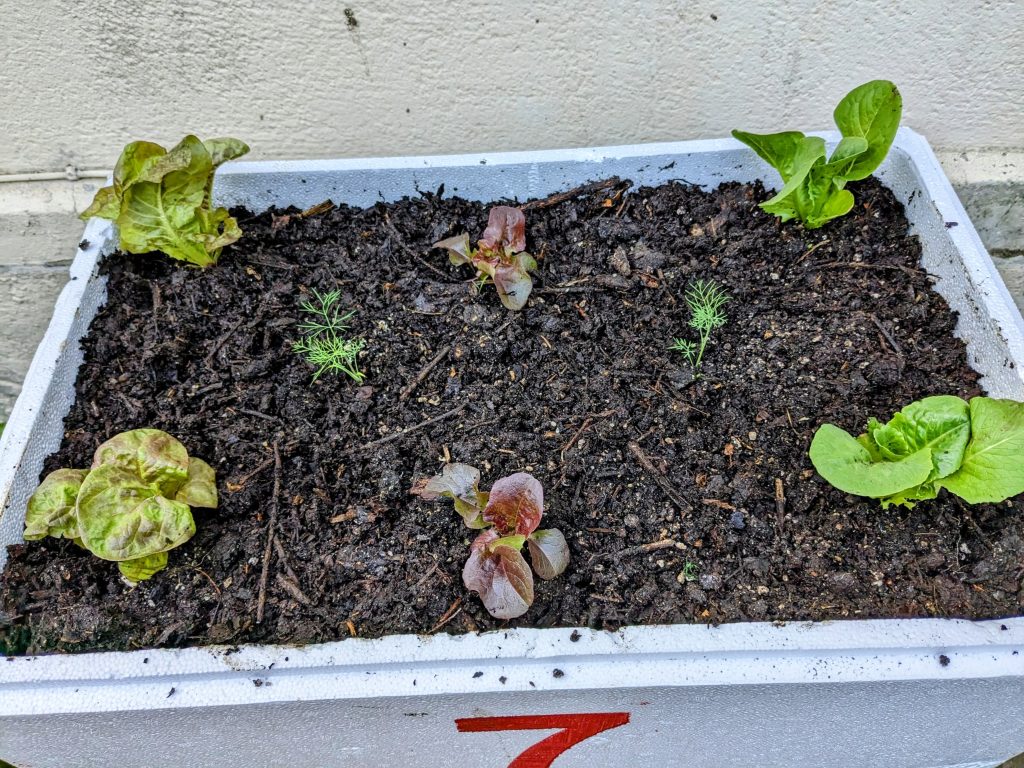

It would have been possible to reduce the number of lettuce to 4 plants, one in each corner and there is a tendency of believing that less plants equals less leaves to harvest.
When there are less plants with more space in a given area, they spread out further with bigger leaves. They are not competing as much for water and nutrients and they will be less stressed and less affected by diseases and predators.
A useful hack 😯
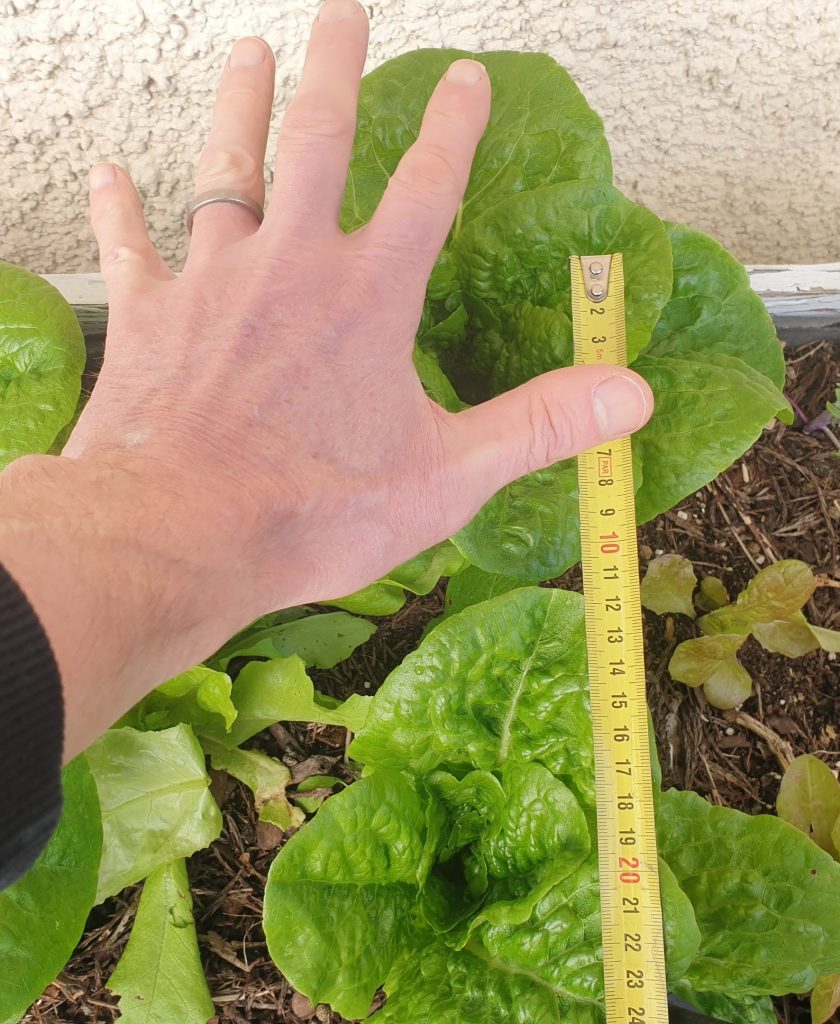
A useful hack is to use your hand to estimate the size requirements when you are planting tiny lettuce plants. My hand with outstretched fingers measures about 20 cm which is about the size of a mature lettuce, but your hands may be smaller.
Plants settling in 🛌
When you plant outside, your plants will probably not do much for a week or two whilst they settle into their new home.
All plants newly planted or moved, need to spend time adjusting to their new situation and more importantly, organising their roots rather than growing and producing new leaves.
You might find young plants wilting in hot weather. With their root systems not fully in place and not properly functioning, they may shut down temporarily to conserve water. In the evening, you will probably notice they recover when temperatures cool down.
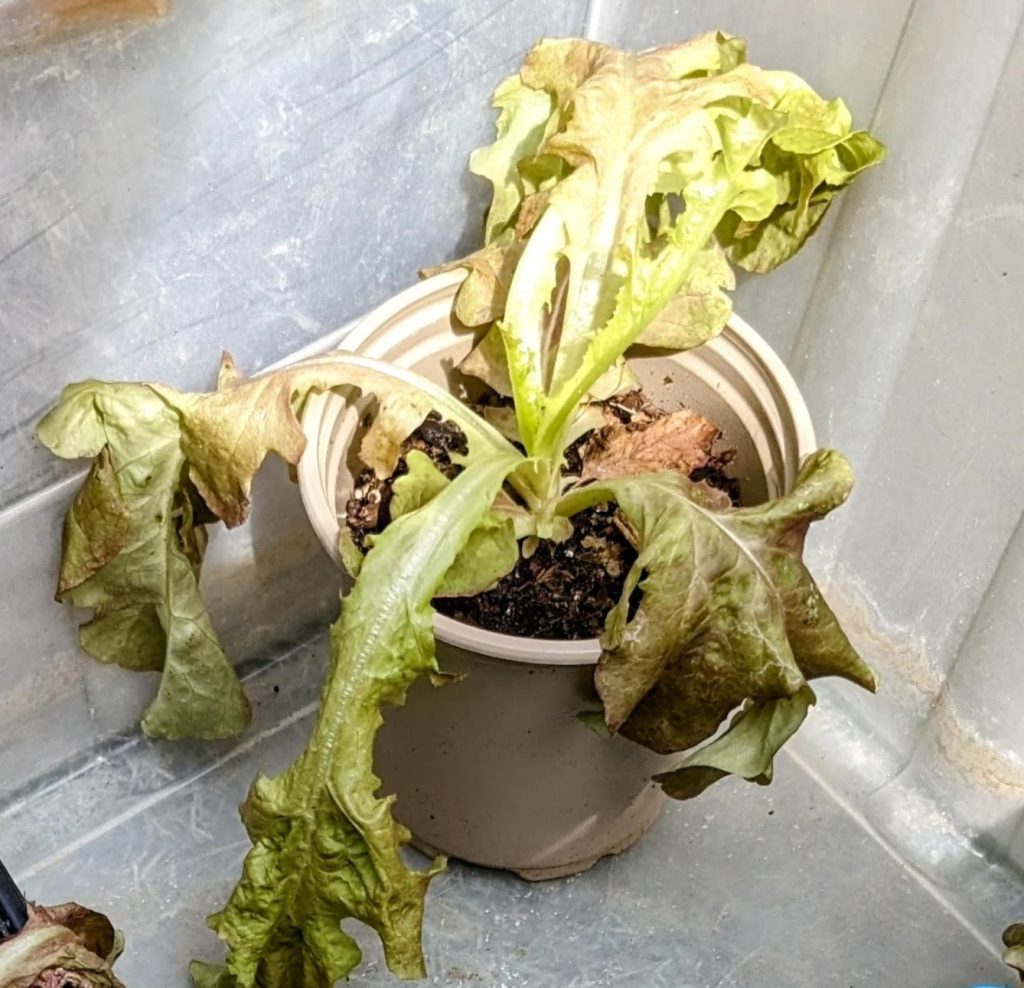
Below left is an example of a wilting lettuce still in its pot. It looks awful doesn’t it?

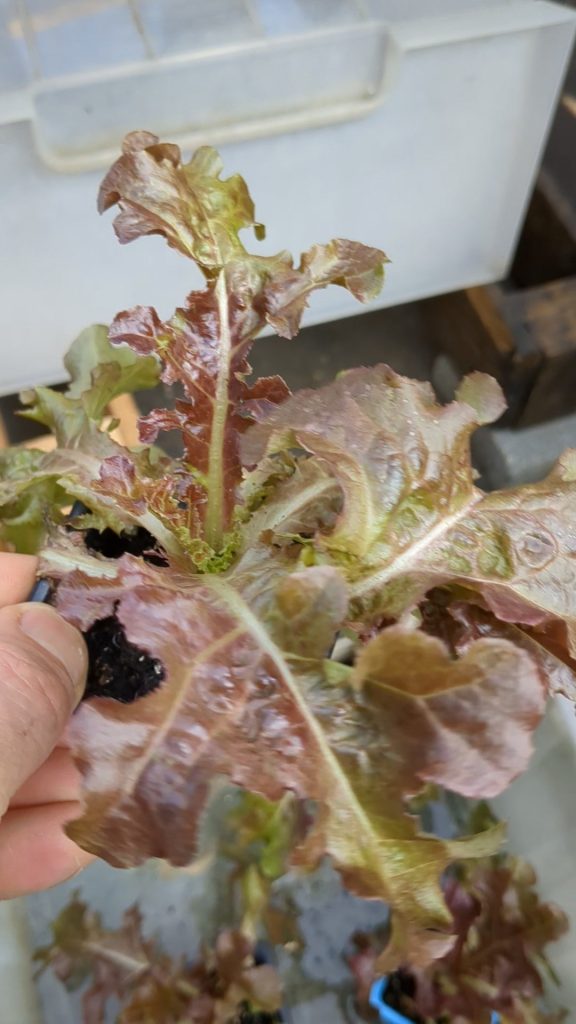
I placed the lettuce in a tray of water and left it for several hours. Unbelievable!
That’s why I advise starting a vegetable garden with lettuce, they are very hard to kill!
If your plants continue to wilt, you might need to provide shade in the hotter part of the day. This is why it’s important to be able to lift and move fish box containers.
Up next – Caring For Your Plants